Law

By Josh Pearson , 7 April 2026

South Korea operates one of the most distinctive casino regulatory frameworks in the world, permitting gambling for foreign visitors while largely prohibiting it for its own citizens. This dual-system model reflects a deliberate policy balance between economic gains from tourism and strict social safeguards. With only one exception allowing local participation, the industry is tightly regulated through licensing, taxation, and oversight mechanisms. Casinos contribute significantly to foreign exchange earnings and employment, yet remain politically sensitive.


By Josh Pearson , 7 April 2026

Sri Lanka’s casino industry operates within a tightly controlled regulatory framework shaped by taxation policies, licensing restrictions, and periodic reforms aimed at balancing revenue generation with social responsibility. While casinos are legal, their operations are largely confined to specific zones and subject to stringent oversight. The government has increasingly relied on the sector as a source of fiscal income, introducing higher levies and compliance requirements. However, regulatory ambiguity and evolving policy debates continue to influence investor sentiment.

By Josh Pearson , 6 April 2026

Gambling prohibition persists in several countries despite the global expansion of regulated betting industries. Governments that enforce bans often cite religious beliefs, cultural norms, and concerns about social harm as primary motivations. While these policies aim to safeguard citizens, they also limit potential economic benefits such as tax revenue and employment generation. 

By Josh Pearson , 5 April 2026

Legal gambling has evolved into a powerful economic driver across several countries, contributing significantly to public revenues, tourism, and employment. From highly regulated casino hubs to state-controlled betting systems, nations have adopted diverse frameworks to legalize and manage gambling activities. While countries such as the United States, the United Kingdom, and Singapore have leveraged gambling for economic growth, others maintain stricter oversight to mitigate social risks.

By Josh Pearson , 2 April 2026

In October 2025, media reports falsely suggested a nationwide ban on online casino gambling in South Africa, sparking confusion and debate across the industry. The controversy originated with Supabet (Portapa Pty Ltd), which introduced a roulette-style game in physical betting shops, allowing fixed-odds wagering on outcomes. The Casino Association of South Africa challenged the offering, arguing it breached licensing laws. The Supreme Court of Appeal clarified that under the Gauteng Gambling Act, casino games and sports betting are legally distinct and require separate licences.

By Josh Pearson , 22 March 2026

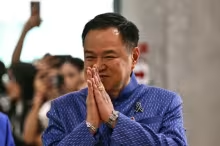
Thailand’s political transition has delivered a decisive blow to plans for a regulated casino industry, signaling a shift in economic priorities and investor sentiment. The return of Prime Minister Anutin Charnvirakul, following a decisive electoral mandate, has effectively halted the proposed Integrated Entertainment Business Act. This legislation had aimed to legalize casino operations and position Thailand as a regional gaming hub. Its suspension not only impacts projected tourism inflows and foreign investment but also reshapes Southeast Asia’s competitive gaming landscape.

By Josh Pearson , 21 March 2026

Argentina has taken a decisive regulatory step against crypto-based gambling by imposing a nationwide ban on the prediction platform Polymarket. The ruling, issued by a court in Buenos Aires, follows complaints from state regulators and industry bodies concerned about unlicensed operations and potential misuse of sensitive economic data.

By Josh Pearson , 18 March 2026

India maintains a complex and highly regulated approach toward casino gambling. While the country has not imposed a complete nationwide ban, strict laws limit where and how casinos can operate. The regulatory framework largely stems from historical legislation designed to control gambling activities and protect public welfare. As a result, only a few regions permit licensed casino operations, while most states prohibit them entirely. Policymakers often cite social concerns, addiction risks, and regulatory challenges as reasons for maintaining restrictions.

By Josh Pearson , 14 March 2026

Efforts to legalize online casino gaming in Virginia have slowed after lawmakers postponed key legislation tied to the oversight of the state’s rapidly expanding gambling industry. The delay centers on plans to establish a new Virginia Gaming Commission, a regulatory body expected to provide centralized supervision for gaming operations across the state. While Virginia has already legalized sports betting and introduced several retail casinos, online casino gaming remains under debate.

By Josh Pearson , 13 March 2026

Brazil’s online gambling industry faces renewed political scrutiny after President Luiz Inácio Lula da Silva declared his intention to work with lawmakers to halt the country’s growing virtual casino market. Speaking at a political gathering ahead of International Women’s Day, the president questioned the rationale behind permitting online casinos while traditional land-based casinos remain banned nationwide.