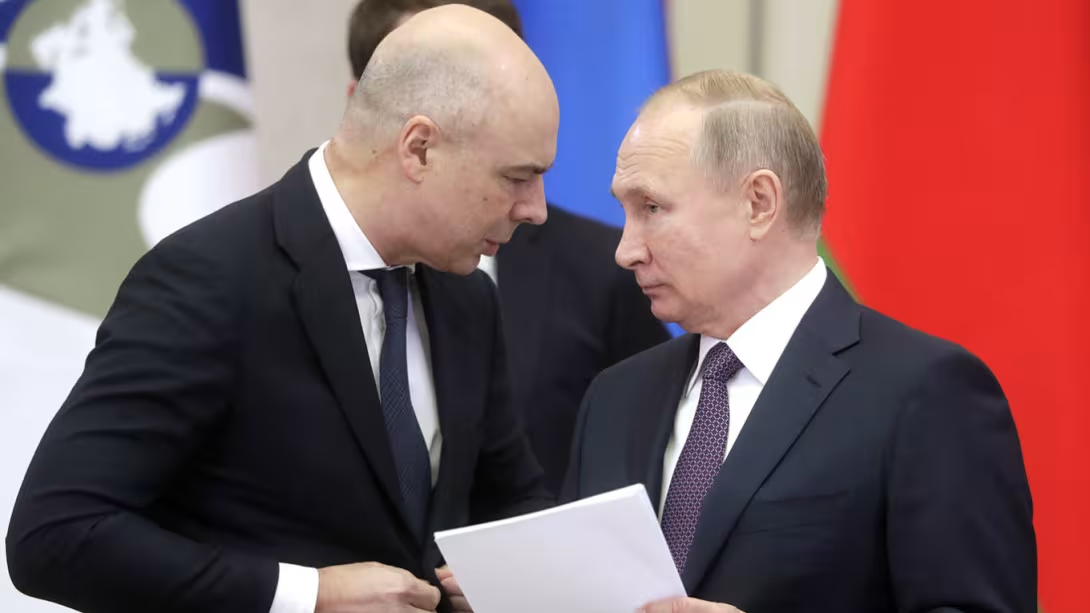
Russia’s Finance Ministry is reportedly evaluating a major shift in gambling policy that could see online casinos legalized after more than a decade of prohibition. The proposal comes as authorities search for additional revenue streams to support a strained federal budget amid prolonged military expenditures and economic headwinds. While online betting through licensed bookmakers is already permitted, a vast parallel market of unregulated digital casinos continues to flourish. Officials believe formal legalization, combined with taxation and oversight, could redirect billions of rubles into state coffers. The debate highlights the growing tension between fiscal necessity, regulatory control and longstanding social concerns surrounding gambling.
A Policy Shift Driven by Fiscal Needs
Finance Minister Anton Siluanov has reportedly suggested reconsidering Russia’s longstanding ban on online casino operations, arguing that a regulated framework could provide a meaningful boost to public finances. The country prohibited digital casino gambling in 2009, restricting legal wagering primarily to licensed bookmakers and state-approved betting operators.
The renewed discussion comes at a time when government spending pressures have intensified, prompting policymakers to explore non-traditional revenue sources. Legalization could transform an underground market into a taxable industry while improving regulatory visibility.
Size of the Legal Betting Market
Russia already maintains a substantial regulated betting ecosystem. According to official estimates, turnover in the country’s licensed online sports betting and totalizator sector reached approximately Rs. 1.7 trillion in 2024. This segment operates under state oversight, with established tax mechanisms and compliance requirements.
However, traditional sports wagering represents only part of the broader online gambling landscape. Digital casino-style gaming remains officially prohibited, leaving a significant demand channel outside regulatory control.
The Expanding Illegal Market
The scale of unregulated online casino activity has become a growing concern for authorities. Estimates suggest that the underground segment could account for transactions worth nearly Rs. 3 trillion annually — almost double the size of the legal betting industry. Roughly 100 unauthorized platforms are believed to be targeting Russian users through offshore registrations and digital payment systems.
This imbalance underscores a key policy dilemma: enforcement alone has not curtailed participation, while the absence of regulation prevents the state from capturing tax revenue or implementing consumer protections.
Potential Economic Benefits
Legalization advocates argue that introducing a licensed online casino framework could generate significant fiscal inflows through taxation, licensing fees and compliance levies. Beyond direct revenue, formal oversight could stimulate related sectors such as financial technology, cybersecurity services and digital compliance infrastructure.
Economists note that redirecting even a portion of the estimated illegal market into regulated channels could translate into billions of rubles in annual public income, offering a buffer against widening budget deficits.
Regulatory and Social Considerations
Any move toward legalization would likely be accompanied by strict controls. These could include mandatory player identification, deposit limits, advertising restrictions and responsible gaming programs aimed at mitigating addiction risks. Financial monitoring would also be critical to address concerns related to money laundering and illicit fund flows.
Opponents, however, caution that expanded access to online casinos may intensify social challenges linked to gambling dependency, raising questions about whether fiscal gains would outweigh potential societal costs.
Strategic Outlook
The proposal signals a broader recalibration of economic policy, where governments facing fiscal strain increasingly examine regulated digital industries as potential revenue sources. Whether Russia ultimately proceeds with legalization will depend on balancing financial imperatives with political, legal and social considerations.
If adopted, the reform could reshape the country’s digital gambling landscape, shifting a large shadow economy into the formal sector while redefining the state’s role as both regulator and revenue beneficiary.
Comments