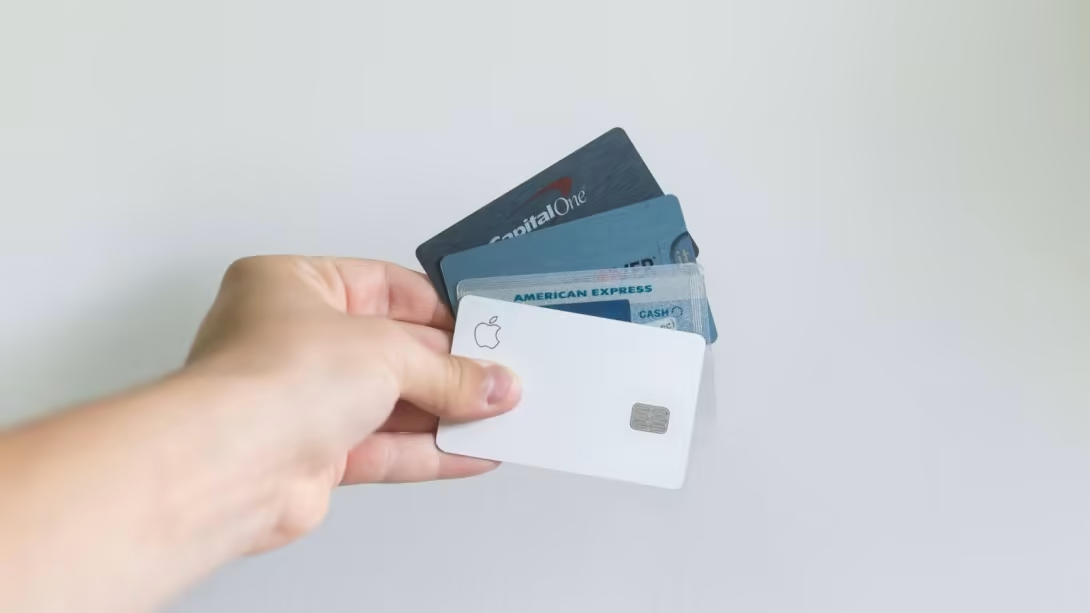
The online casino industry in Europe is undergoing a dramatic shift in how players fund their accounts. While debit and credit cards once dominated the landscape, the rise of digital wallets, instant banking solutions, and cryptocurrencies is reshaping payment preferences. This evolution reflects broader financial trends across Europe, where speed, security, and privacy increasingly drive consumer choices. The shift not only impacts user experience but also influences operator strategies, compliance frameworks, and the future of digital finance. Analysts suggest that the convergence of traditional payment methods with blockchain-based systems could define the next era of online gaming transactions.
The Decline of Traditional Dominance
For years, debit and credit cards were the default option for online casino deposits. However, regulatory pressures, transaction delays, and consumer demand for greater privacy have reduced their dominance. In several European markets, financial restrictions and banking scrutiny on gambling transactions have accelerated the migration to alternatives. While cards remain widely accepted, they now coexist with a rapidly expanding portfolio of digital-first solutions.
The Rise of E-Wallets and Instant Banking
Digital wallets such as PayPal, Skrill, and Neteller have emerged as popular choices, offering players near-instant deposits and withdrawals. These platforms also allow users to separate gaming funds from personal bank accounts, adding an extra layer of security. Meanwhile, instant banking systems leveraging open banking protocols have gained traction, particularly in Northern Europe, where seamless integration with local banks ensures efficiency and transparency.
Cryptocurrency as a Game-Changer
Perhaps the most significant development is the adoption of cryptocurrencies. Bitcoin, Ethereum, and other digital assets are increasingly used for funding casino accounts, offering benefits such as anonymity, low fees, and fast cross-border transactions. For players in jurisdictions with strict payment restrictions, crypto provides an alternative route to access gaming platforms. Beyond convenience, blockchain technology also introduces “provably fair” systems that enhance transparency, making it particularly attractive to tech-savvy users.
Implications for Operators and Regulation
For operators, diversifying payment options has become both a competitive advantage and a necessity. Integrating crypto and digital wallets requires investment in technology and compliance frameworks, particularly as regulators intensify scrutiny around anti-money laundering (AML) and responsible gaming. Operators that successfully balance innovation with compliance stand to gain market share, while those slow to adapt risk falling behind.
A Glimpse Into the Future
The evolution of payments in European online casinos mirrors a wider transformation in consumer finance. As players demand speed, flexibility, and security, operators are compelled to embrace fintech-driven solutions. Analysts believe that the coexistence of traditional and decentralized systems will define the near future, with crypto playing an increasingly influential role. In many ways, the online casino sector is serving as a testing ground for broader digital finance adoption across Europe.
Comments