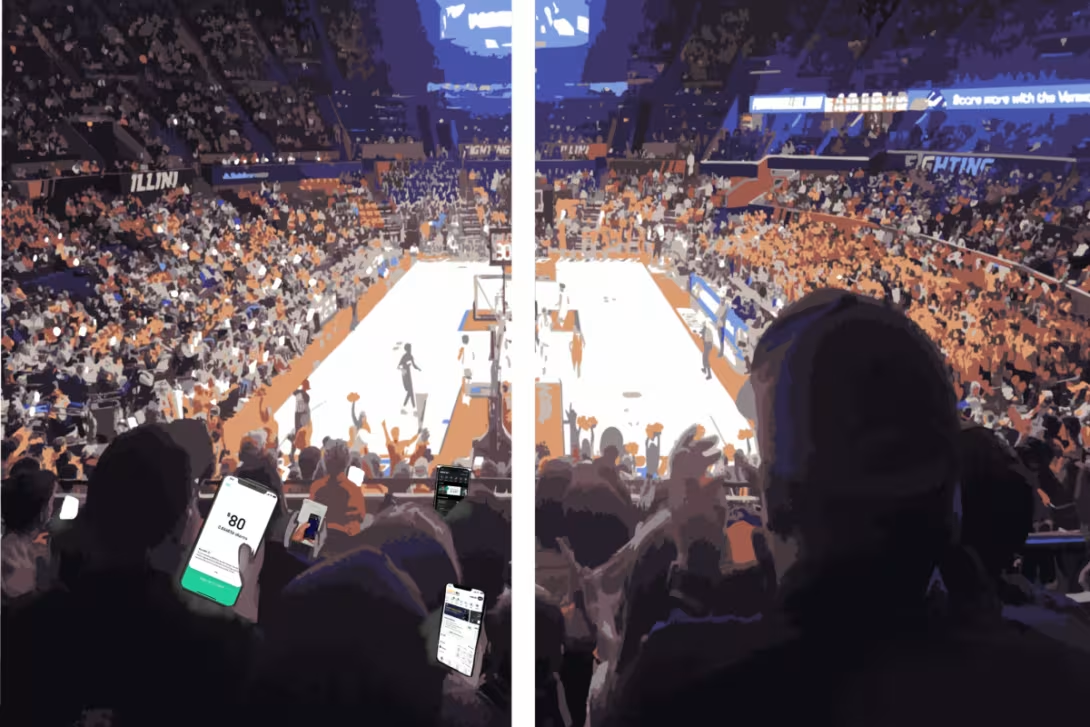
The mechanics of gambling are increasingly influencing everyday consumer interactions, transforming routine digital and retail engagements into experiences modeled on casino psychology. From reward-based shopping apps to gamified financial products, businesses are incorporating elements of chance, instant gratification and variable rewards to deepen user engagement. This trend reflects a broader shift in behavioral design, where uncertainty and anticipation are deployed to stimulate participation and spending. While such strategies drive revenue growth and customer retention, they also raise ethical and regulatory concerns. The convergence of gaming logic with mainstream commerce signals a structural evolution in how companies capture attention and monetize behavior.
The Rise of Gamification in Consumer Markets
What was once confined to casinos and betting floors has quietly entered mainstream commerce. Businesses across sectors — including retail, fintech, entertainment and social media — are embedding probabilistic reward systems into customer journeys. Spin-to-win discounts, mystery cashbacks and randomized promotional prizes have become standard features in digital ecosystems.
These mechanisms are not accidental. Behavioral economists have long observed that variable reward schedules — where outcomes are unpredictable — generate higher engagement levels than fixed incentives. Companies leverage this principle to increase app usage, transaction frequency and brand stickiness.
In financial terms, gamified engagement translates into improved customer lifetime value and higher average revenue per user.
Psychological Triggers Behind Casino-Style Design
Casino environments are meticulously engineered to sustain attention. The same psychological triggers — anticipation, near-misses and intermittent rewards — now underpin many digital platforms.
Mobile applications frequently incorporate progress bars, streak bonuses and limited-time offers that simulate the suspense dynamics of wagering. The design creates dopamine-driven feedback loops, encouraging repeated interaction.
Industry analysts describe this as the “casino-ization” of consumer interfaces. The objective is not necessarily to promote gambling itself, but to replicate its engagement architecture in low-stakes environments such as shopping or online entertainment.
The economic incentive is clear: longer engagement correlates strongly with higher monetization rates.
Fintech and the Blurring of Financial Boundaries
Perhaps the most controversial application of gambling logic is in financial technology. Certain trading platforms and digital asset exchanges employ celebratory animations, prize-linked savings and gamified leaderboards to attract younger users.
Critics argue that such features may trivialize risk perception. When investing is framed as a game, volatility can be misinterpreted as entertainment rather than financial exposure.
Regulators globally have begun scrutinizing gamified financial interfaces. Concerns center on consumer protection, transparency and suitability standards. Policymakers are examining whether these engagement tactics amplify speculative behavior, particularly among retail investors.
Retail and Loyalty Programs Embrace Uncertainty
Retailers have embraced chance-based rewards as a powerful marketing lever. Instead of offering fixed Rs. 500 discounts, brands may provide a “mystery reward” worth anywhere between Rs. 100 and Rs. 2,000. The uncertainty increases anticipation and open rates for promotional campaigns.
Loyalty ecosystems increasingly integrate tier-based unlockables and randomized bonus multipliers. These features sustain customer participation while reducing the predictable cost structure associated with flat discounts.
From a business perspective, probabilistic rewards allow companies to optimize promotional spending while maintaining excitement. The perceived value often exceeds the actual cost.
Economic Implications for Businesses
The integration of casino-style engagement reflects a strategic response to attention scarcity. In an economy saturated with digital stimuli, businesses compete aggressively for user time.
Gamification enhances retention metrics, reduces churn and increases cross-selling opportunities. For publicly listed firms, such improvements can materially influence earnings growth and shareholder value.
However, long-term sustainability depends on maintaining consumer trust. If engagement tactics are perceived as manipulative, reputational risks may outweigh short-term gains.
Ethical and Regulatory Considerations
The blending of entertainment psychology with commerce raises legitimate ethical questions. Consumer advocates warn that vulnerable populations may be disproportionately affected by variable reward structures.
Governments are evaluating whether clearer disclosures, age restrictions or design limitations are necessary. In certain jurisdictions, authorities have proposed guidelines to separate entertainment gamification from gambling-adjacent mechanics.
The debate centers on balance: fostering innovation while safeguarding consumers.
A Structural Shift in Commercial Design
The migration of gambling logic into everyday experiences signals a structural transformation in how businesses operate. Companies are no longer merely selling products; they are engineering engagement ecosystems rooted in behavioral science.
For finance and business observers, this evolution reflects a deeper trend — the monetization of anticipation. As digital commerce continues to mature, the boundary between leisure, risk and routine interaction will likely blur further.
In this environment, strategic oversight and ethical design will determine whether the casino-inspired model becomes a sustainable growth engine or a regulatory flashpoint in the years ahead.
Comments