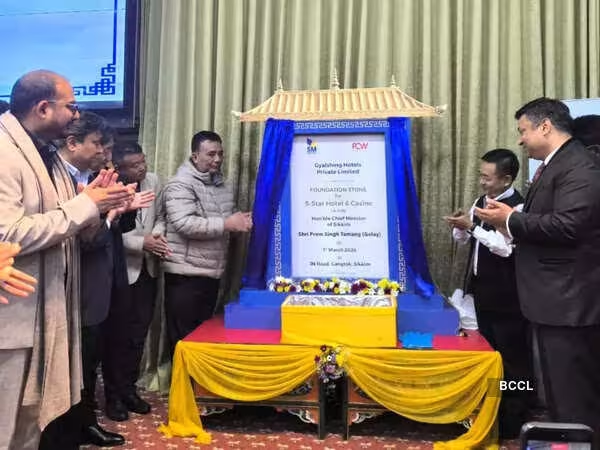
Hyatt Regency is set to establish a 150-room five-star property in Gangtok following the foundation stone ceremony led by Prem Singh Tamang. The project is positioned as a transformative addition to Sikkim’s premium hospitality infrastructure, aiming to strengthen the state’s appeal as a high-value tourism, wedding and MICE destination. Strategically located in the capital city, Gangtok, the development reflects a broader push to attract upscale travelers and corporate events while stimulating regional economic growth and investment confidence.
Strategic Boost to Premium Hospitality
The foundation of Hyatt Regency Gangtok marks a pivotal milestone in Sikkim’s tourism development roadmap. Designed as a 150-room luxury hotel, the project seeks to redefine the hospitality landscape of the Himalayan state.
Sikkim has long been known for its natural beauty and eco-tourism appeal. However, premium accommodation capacity has remained relatively limited compared with other established hill destinations. The addition of an internationally recognized luxury brand is expected to elevate service benchmarks and attract discerning domestic and global travelers.
Government leadership has emphasized the role of hospitality infrastructure in unlocking higher-value tourism segments.
Focus on Weddings and MICE Tourism
Beyond leisure travel, the project aims to position Gangtok as a competitive venue for destination weddings and MICE — meetings, incentives, conferences and exhibitions.
The MICE segment represents a significant revenue opportunity within India’s travel ecosystem. Premium hotels equipped with conference halls, banquet facilities and integrated event services often generate diversified revenue streams that extend beyond room occupancy.
Destination weddings, in particular, have emerged as a rapidly expanding niche. Scenic locations paired with five-star hospitality create compelling value propositions for high-spending clientele.
Economic Multiplier and Regional Growth
Large-scale hospitality investments typically generate multi-layered economic benefits. During construction, the project is expected to create employment across engineering, architecture and allied sectors. Upon completion, operational roles spanning management, hospitality services, security and logistics will provide sustained job opportunities.
The hotel’s presence may also catalyze growth in local supply chains, including food producers, transport operators and event planners. Increased tourist inflows can stimulate retail and cultural enterprises, strengthening Gangtok’s broader urban economy.
Strategic infrastructure investments of this nature often enhance investor confidence in emerging destinations.
Urban Development and Infrastructure Integration
Positioned in the heart of Gangtok, the property is expected to integrate seamlessly with existing urban infrastructure. Improved road connectivity and expanding air access in the northeastern region have enhanced the state’s tourism potential in recent years.
Luxury hospitality developments can act as anchor projects, encouraging complementary investments such as upscale retail, fine dining establishments and wellness centers.
By strengthening its premium accommodation portfolio, Sikkim signals readiness to compete with other high-end hill destinations across India.
Competitive Positioning in India’s Luxury Travel Market
India’s luxury hospitality market has demonstrated resilience amid evolving travel patterns. Affluent domestic travelers are increasingly seeking curated experiences within the country, particularly in scenic and culturally rich regions.
For Hyatt Regency, expanding into Gangtok represents strategic geographic diversification. For Sikkim, the partnership enhances global brand visibility and strengthens its positioning within the premium tourism segment.
As competition intensifies among destinations, integrated hospitality infrastructure will play a decisive role in capturing high-spending visitors.
Long-Term Outlook
The Hyatt Regency Gangtok project underscores a deliberate shift toward value-driven tourism rather than volume-based inflows. By targeting weddings, corporate events and upscale leisure travel, Sikkim aims to increase per capita tourist expenditure while maintaining environmental sustainability.
If executed efficiently, the development could reshape Gangtok’s hospitality profile and contribute meaningfully to state revenue growth.
Conclusion
The foundation of Hyatt Regency Gangtok represents more than the launch of a luxury hotel; it signals Sikkim’s strategic intent to transform into a premium tourism and MICE hub. Backed by political commitment and brand credibility, the 150-room five-star property is poised to strengthen the state’s hospitality ecosystem.
As India’s travel industry evolves, investments of this scale are likely to redefine regional competitiveness and unlock new economic opportunities in the Northeast.
Comments