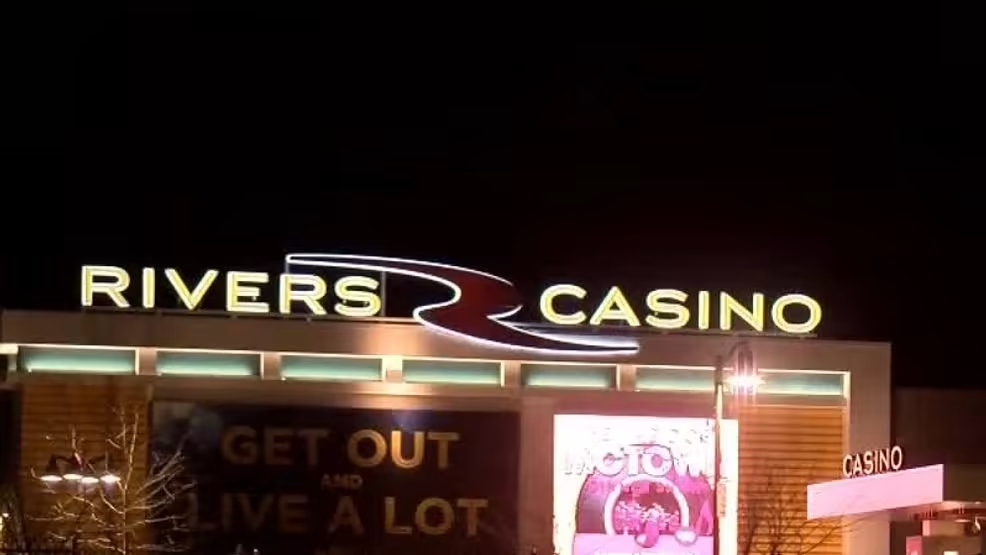
In a groundbreaking moment for Virginia’s labour and gaming industries, employees at Rivers Casino Portsmouth have voted overwhelmingly in favor of their first-ever collective bargaining agreement, marking a significant milestone for organized labor in the state. Backed by Teamsters Local 822, the deal grants nearly 16% wage increases, employer-funded health insurance, enhanced paid leave, and protections against unfair dismissal. This historic agreement not only strengthens worker rights but also sets a precedent for future negotiations in Virginia’s fast-growing gaming sector, signaling a shift toward higher labour standards and structured workforce representation in the region.
A Historic Win for Workers
The employees of Rivers Casino Portsmouth, represented by Teamsters Local 822, have officially ratified their first collective bargaining agreement—an achievement hailed as a turning point in Virginia’s labor history. The union confirmed that 95% of members voted in favor of the new contract, which secures significant financial and workplace protections.
Under the agreement, workers will benefit from a total 15.95% wage increase across the duration of the contract. In addition to competitive pay adjustments, the deal ensures fully employer-paid healthcare coverage, an increasingly rare benefit in today’s labor market. The contract also introduces expanded paid time off and a crucial “just cause” clause that safeguards employees against arbitrary terminations.
Union representatives described the outcome as “historic,” noting that this is the first casino union contract in Virginia’s history, a development that could inspire similar actions across other gaming establishments in the state.
Significance for the Gaming Industry
The ratification of this contract marks a pivotal shift in Virginia’s relatively young gaming industry. Since casino gaming was legalized only a few years ago, the state’s regulatory and labor frameworks have been evolving rapidly. Rivers Casino Portsmouth, one of the earliest entrants in the market, has now set a benchmark for labor relations within the sector.
From a business standpoint, this agreement will likely influence future labor negotiations at other Virginia casinos and potentially beyond. As the gaming industry expands across the U.S., unions such as the Teamsters are increasingly asserting their presence to ensure fair compensation, equitable treatment, and improved workplace conditions for hospitality and gaming employees.
This development also comes amid a broader national trend of organized labor resurgence—seen in sectors ranging from automotive to entertainment—where workers are demanding a more balanced share of corporate success.
Economic and Operational Implications
While the new contract represents a victory for labor rights, it also introduces new financial dynamics for casino operators. Wage growth and enhanced benefits will inevitably increase operating costs, prompting operators to reassess their long-term labor strategies. For Rivers Casino Portsmouth, however, the agreement could yield substantial dividends in workforce stability, morale, and retention—a crucial advantage in the high-turnover hospitality industry.
Analysts point out that improved employee satisfaction often correlates with higher productivity, better customer experience, and stronger community relations—factors that can contribute to sustainable profitability despite rising labor expenses. Furthermore, in an increasingly competitive entertainment market, socially responsible labor practices may enhance corporate reputation and regulatory goodwill.
A Broader Shift Toward Worker Empowerment
The Rivers Casino deal symbolizes more than just a workplace win—it signals a shift in the socio-economic narrative of the gaming industry. Casinos, once perceived as transient workplaces with limited bargaining power, are now becoming sites of organized advocacy and formal labor structures.
Teamsters Local 822 leadership emphasized that this contract is not only a victory for casino employees but also a message to workers statewide: that collective action can yield tangible and transformative results. The union’s success could motivate other service-sector employees—particularly those in hospitality, retail, and entertainment—to pursue similar contracts emphasizing fairness, safety, and financial security.
Conclusion
The Rivers Casino Portsmouth–Teamsters agreement represents a defining moment for labor relations in Virginia’s gaming sector. Beyond immediate wage and benefit gains, it signals a broader transformation in how casino operators, employees, and regulators engage in shaping workplace standards.
For businesses, the development underscores a growing imperative to integrate fair labor practices into long-term operational strategies. For workers, it reaffirms the power of collective negotiation in achieving economic equity and respect in the workplace. As Virginia’s casino industry continues to expand, this precedent-setting deal may well become the blueprint for a new era of fair and sustainable employment in the gaming sector.
Comments