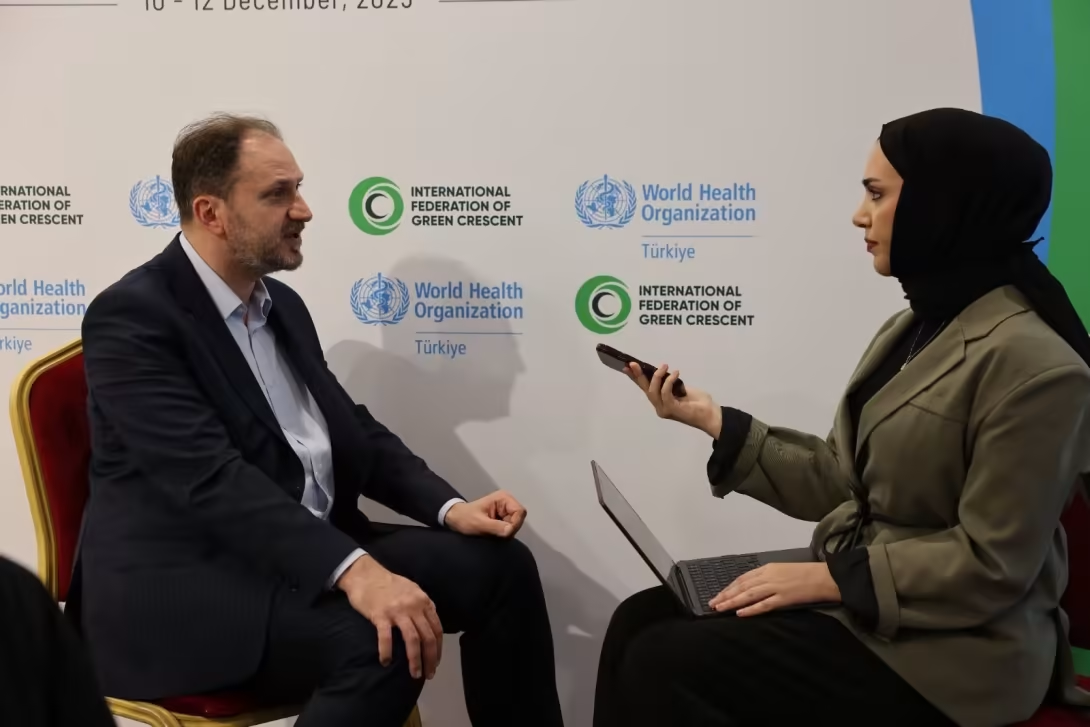
A global coalition of public health experts, policymakers and addiction specialists convened in Istanbul to address the accelerating rise of behavioral addictions driven by digital platforms, online gambling and gaming. Organized by the Turkish Green Crescent (Yeşilay) and the International Green Crescent Federation in collaboration with the World Health Organization’s Türkiye Country Office, the three-day meeting brings together representatives from 25 nations. The gathering aims to strengthen international awareness, harmonize policy strategies and develop more effective prevention frameworks. With digital ecosystems evolving rapidly, speakers stressed that regulatory measures are struggling to keep pace, urging stronger cross-border cooperation to confront an escalating public health challenge.
---
International Gathering Focuses on Emerging Addiction Risks
The Turkish Green Crescent and the International Green Crescent Federation, working alongside the WHO Türkiye Country Office, opened their third global meeting on behavioral addictions in Istanbul. The event brings together 52 experts from 25 countries, underscoring the growing international concern surrounding compulsive behaviors linked to technology use, gambling and gaming.
Hosted at Yeşilay’s headquarters, the program seeks to cultivate deeper understanding of addiction trends and guide policymakers as governments confront unprecedented digital risks. Organizers emphasized that the meeting’s purpose extends beyond academic discourse, aiming to catalyze collaborative strategies that can be implemented at national, regional and global levels.
---
A Comprehensive Agenda for a Rapidly Evolving Threat
Over three days, participants are scheduled to examine a wide range of issues shaping the behavioral addiction landscape. Topics include contemporary public health approaches, the refinement of early detection systems, and a review of diagnostic tools and assessment frameworks currently in use.
Experts will also evaluate how evolving digital architectures influence user behavior, particularly among children and young adults. The goal is to identify actionable pathways for governments and health organizations seeking more robust prevention, treatment and harm-reduction measures.
---
Digital Ecosystems Driving Compulsive Use
Speaking at the opening session, Turkish Green Crescent President Mehmet Dinç highlighted the growing influence of digital platforms, noting that many systems are deliberately engineered to increase engagement and shape user habits.
“Digital platforms are designed to keep people engaged, shape behavior and create addiction,” Dinç said, emphasizing that societies worldwide are facing mounting consequences in mental health, financial stability and family life.
Dinç pointed to regulatory attempts underway in several countries—such as advertising restrictions, age-verification protocols, algorithmic transparency requirements and spending limits in gaming and gambling environments—but warned that these interventions remain insufficient. Current measures, he said, have not kept pace with the velocity of technological change.
---
Call for Swift and Coordinated Global Action
Dinç described behavioral addictions as a cross-border threat that no single country can address alone. With digital products transcending national boundaries, he urged governments and international organizations to intensify cooperation and build unified prevention models.
“In the fight against behavioral addictions, we need to move much faster and far more decisively,” he cautioned, stressing that the challenge now demands coordinated global policy responses and long-term investment in public health systems.
---
Path Forward: Toward Stronger Global Resilience
The outcomes of the Istanbul meeting are expected to inform upcoming policy discussions and technical guidelines in the field of behavioral addictions. As digital environments continue to evolve, the need for agile, evidence-based interventions remains pressing.
With experts aligned on the urgency of the challenge, the gathering marks a significant step toward building a more resilient global response to prevent and mitigate the growing impact of behavioral addictions.
Comments