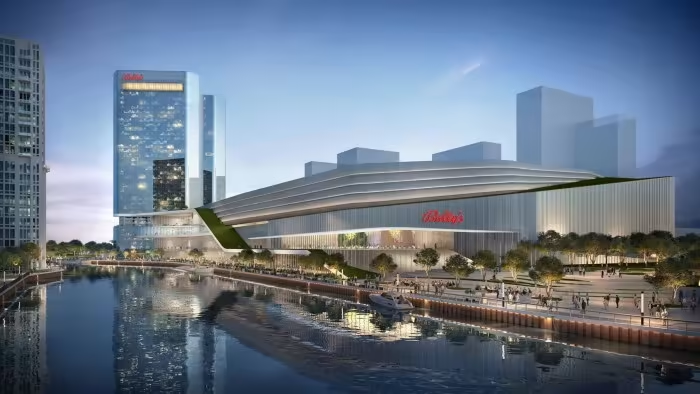
Chicago’s long-anticipated casino project is gaining momentum as private equity firms step in to back the venture, promising not only economic growth but also an opportunity for residents to become stakeholders. The proposal highlights job creation, enhanced tourism, and local investment potential, while also raising questions about the social costs of expanded gambling. With financial institutions eyeing strong returns, the city now faces the delicate balance of leveraging private capital for development while ensuring responsible gaming practices and equitable benefits for Chicagoans.
---
A New Chapter in Chicago’s Gaming Landscape
Chicago has long debated the role of a major casino in fueling economic revitalization. Now, with private equity firms entering the arena, the city is seeing a renewed push to transform its casino ambitions into reality. Investors argue that the project could serve as a catalyst for urban growth, generating substantial tax revenues for public infrastructure and education while positioning Chicago as a premier gaming destination in the Midwest.
At the heart of the plan is an inclusive financing model that encourages local residents to participate as small-scale investors. This strategy aims to broaden public support and distribute financial benefits more widely, moving beyond the perception that casinos only enrich corporate players.
---
Economic Promise and Financial Incentives
The private equity-backed proposal envisions the casino as a multi-faceted entertainment hub, complete with hotels, restaurants, theaters, and retail spaces. Analysts project billions in gross gaming revenue annually, a portion of which would flow directly into city coffers. This could ease fiscal pressures, strengthen municipal services, and provide a reliable funding stream for pension obligations — a chronic challenge for Chicago’s budget.
For investors, the upside lies in attractive returns from a high-demand, high-margin industry. With gaming markets across the U.S. showing resilience even during economic slowdowns, private equity sees Chicago’s casino as a long-term growth opportunity. The addition of entertainment and hospitality arms further diversifies revenue sources, making the venture appealing beyond traditional gambling profits.
---
Community Involvement and Concerns
What sets this initiative apart is the attempt to involve Chicago residents as stakeholders. By offering opportunities for direct investment, the project aims to foster a sense of ownership and transparency. This could help counter community skepticism, as many citizens remain wary of gambling’s potential downsides, such as addiction, crime, and neighborhood disruption.
Critics warn that while the economic gains are tempting, policymakers must guard against disproportionate social costs. Advocates of responsible gaming stress the importance of allocating funds toward addiction treatment programs, educational campaigns, and stricter regulatory oversight. Without these safeguards, the long-term benefits may be undermined by unintended consequences.
---
Balancing Growth with Responsibility
The Chicago casino proposal encapsulates a broader national trend: cities turning to private equity to finance ambitious projects with high revenue potential. While the partnership promises innovation, scale, and efficiency, it also requires vigilance to ensure that public interest remains paramount.
If executed with careful planning, the project could become a model of public-private collaboration, balancing profitability with social responsibility. For Chicago, the stakes are high — both financially and socially — as the city rolls the dice on its casino future.
Comments