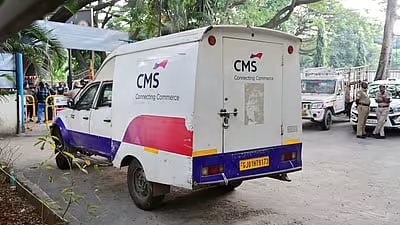
A nine-member gang accused of orchestrating a Rs 7.11-crore ATM van robbery in Bengaluru allegedly planned to flee to Goa and spend the stolen funds at casinos, according to a detailed charge sheet filed by Siddapura police. The 1,328-page document, submitted before a Bengaluru court, outlines the alleged conspiracy, execution and intended escape route of the accused. Investigators have charged the suspects with dacoity, wrongful confinement and destruction of evidence. The case underscores persistent vulnerabilities in cash logistics operations and highlights the intersection of organized crime and high-value leisure destinations.
The Heist: Anatomy of a Coordinated Robbery
The alleged crime involved the targeted interception of an ATM cash replenishment vehicle carrying Rs 7.11 crore. According to investigators, the group executed the operation with precision, restraining personnel and seizing the funds before dispersing.
Police have charged the accused under provisions related to dacoity, wrongful restraint and confinement, as well as causing disappearance of evidence. Authorities contend that the robbery was not an opportunistic act but the result of prior planning, reconnaissance and coordinated execution.
The magnitude of the stolen amount places the incident among the more significant cash van robberies recorded in the region in recent years.
Charge Sheet Details: A 1,328-Page Investigation
The Siddapura police submitted a comprehensive 1,328-page charge sheet before a Bengaluru court, laying out what investigators describe as a meticulously documented trail of planning, movement and financial intent.
The document reportedly details communication records, logistical arrangements and the roles attributed to each member of the nine-person group. Law enforcement officials argue that the accused intended to move swiftly out of Karnataka following the robbery to avoid detection.
The volume of documentation reflects the complexity of prosecuting organized financial crimes, particularly those involving multiple accused and cross-state movement.
Alleged Escape Plan: Goa as a Destination
According to the findings cited in the charge sheet, the group allegedly planned to travel to Goa as part of their escape route. Investigators claim the accused intended to spend substantial portions of the stolen Rs 7.11 crore at casinos.
While authorities have not indicated whether any funds were ultimately spent as planned, the alleged intention reveals the perceived anonymity and liquidity associated with gaming destinations.
Industry observers note that large cash transactions in leisure hubs can present monitoring challenges, reinforcing the importance of stringent compliance mechanisms in hospitality and gaming establishments.
Legal Charges and Financial Implications
The accused face multiple charges, including dacoity and wrongful confinement, both of which carry severe penalties under Indian law. Additional counts related to the destruction or concealment of evidence may further compound potential sentencing outcomes if convictions are secured.
Beyond the criminal proceedings, the incident raises broader concerns about operational risk management in cash logistics. Financial institutions and service providers increasingly rely on armored transport systems, yet high-value cash movement continues to attract organized criminal networks.
Risk mitigation strategies—such as route randomization, enhanced surveillance integration and real-time tracking—are becoming critical components of operational safeguards.
Organized Crime and Cash-Based Economies
The case illustrates the continued appeal of cash-intensive operations as targets for organized criminal groups. Despite rapid digitalization across India’s financial ecosystem, substantial volumes of physical currency remain in circulation, particularly in ATM networks.
For policymakers and law enforcement agencies, the incident underscores the necessity of inter-state coordination and advanced forensic investigation techniques. The alleged plan to move across state lines highlights how criminal enterprises often exploit jurisdictional complexities.
Conclusion
The Rs 7.11-crore ATM van robbery and the alleged plan to channel stolen funds into high-stakes leisure activities underscore the evolving dynamics of organized financial crime. As the judicial process unfolds in Bengaluru, the case may serve as a reference point for strengthening cash logistics security frameworks.
For the financial sector, the episode reinforces a fundamental reality: where significant liquidity exists, so too does heightened risk. The intersection of cash mobility, organized planning and rapid interstate movement demands continuous vigilance from institutions and enforcement authorities alike.
Comments