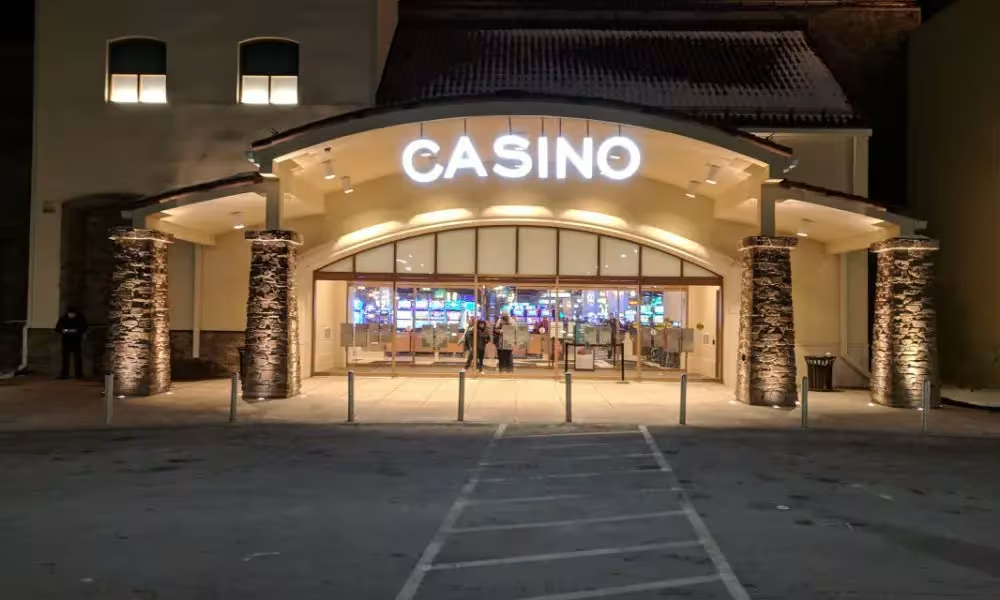
New York’s full-scale commercial casinos recorded an 8.7% year-over-year increase in gross gaming revenue in January, reflecting steady consumer demand and operational resilience in the state’s regulated gaming sector. The uptick underscores the continuing recovery and expansion of brick-and-mortar gaming following broader economic normalization. Growth was supported by stable visitation trends, diversified entertainment offerings and improved slot and table game performance. Industry analysts view the January performance as an indicator of structural strength rather than seasonal volatility. With competition intensifying and downstate licensing prospects advancing, New York’s commercial casino market appears positioned for sustained medium-term expansion.
January Performance Reflects Market Stability
New York’s four upstate commercial casinos delivered a combined 8.7% increase in gross gaming revenue compared with January of the previous year, according to state-level industry data. The improvement reflects steady player engagement and stronger per-visitor spending despite broader macroeconomic pressures affecting discretionary income.
Slots continued to account for the majority of gaming revenue, maintaining their dominance as the primary earnings driver. Table games and other gaming segments contributed incremental gains, signaling balanced portfolio performance rather than reliance on a single vertical.
Industry observers note that January is traditionally a slower post-holiday month, making the year-over-year growth particularly noteworthy.
Drivers Behind the Revenue Expansion
Several structural factors contributed to January’s improved financial performance:
1. Diversified Entertainment Offerings:
Casino operators have increasingly integrated hospitality, dining and live entertainment to drive cross-segment revenue. Non-gaming amenities have proven effective in stabilizing visitation volumes and extending customer dwell time.
2. Improved Customer Retention Strategies:
Enhanced loyalty programs and data-driven marketing initiatives have strengthened repeat visitation. Operators are leveraging analytics to personalize promotions and optimize player yield.
3. Regional Economic Resilience:
Despite inflationary pressures, consumer spending in the Northeast has demonstrated relative stability. Regional tourism flows and weekend destination traffic have provided consistent footfall.
These elements collectively reinforce the perception that revenue growth reflects operational refinement rather than temporary demand spikes.
Competitive Landscape and Downstate Expansion
The state’s gaming industry is at an inflection point as regulators advance plans to award full-scale casino licenses in the downstate region, including the New York City metropolitan area. The prospect of new entrants introduces both opportunity and competitive risk.
Existing upstate casinos may experience margin pressure once downstate properties become operational, particularly given population density and tourism concentration in the southern region. However, analysts suggest that expanded licensing could ultimately grow the overall gaming ecosystem by increasing statewide visibility and attracting incremental visitation.
Strategic positioning and capital allocation decisions over the next 12 to 24 months will be critical for incumbents.
Fiscal Contributions and Policy Implications
Commercial casino revenues generate significant tax proceeds earmarked for education funding and local community development. The January increase therefore carries fiscal implications beyond corporate earnings.
As policymakers evaluate future licensing frameworks and tax structures, sustained revenue growth strengthens arguments for measured expansion under robust regulatory oversight. At the same time, regulators are likely to maintain strict compliance standards to ensure responsible gaming and consumer protection.
The balance between revenue generation and regulatory prudence remains central to the state’s long-term gaming strategy.
Outlook for 2026
Market analysts project moderate growth for New York’s commercial casinos through 2026, contingent upon macroeconomic stability and competitive adaptation. Continued investment in technology, customer experience and operational efficiency will be essential in maintaining momentum.
While short-term volatility cannot be ruled out, January’s 8.7% year-over-year increase suggests that New York’s commercial casino sector has entered a phase of structural resilience rather than cyclical recovery.
For investors and policymakers alike, the data underscores a simple conclusion: regulated gaming in New York remains a stable and expanding component of the state’s broader entertainment economy.
Comments