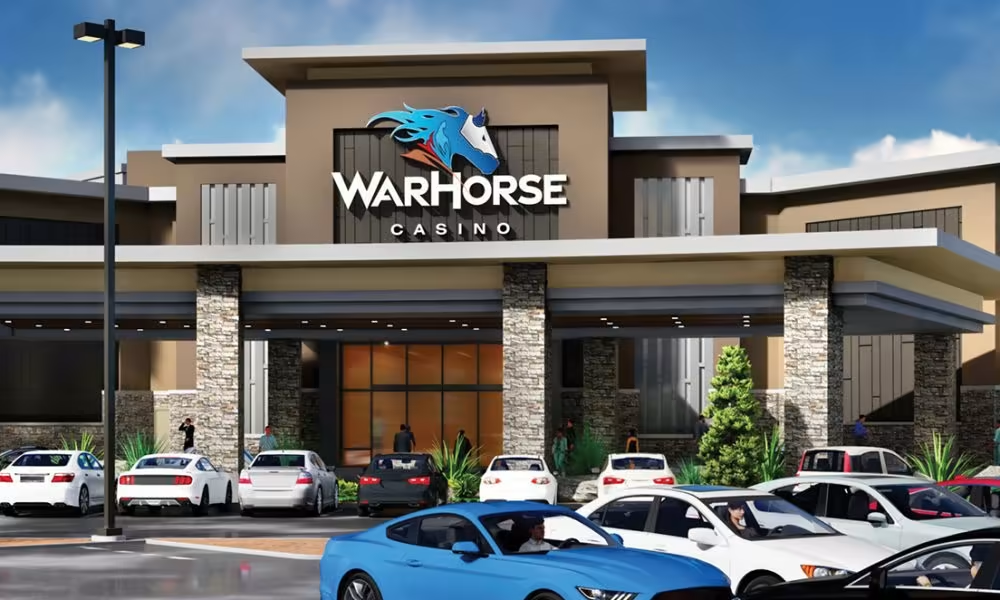
Nebraska’s entry into the casino industry is proving to be more lucrative than initially expected. Early revenue reports show that casino earnings have surged, offering the state a new and robust stream of income. Advocates argue that the expansion has only begun to reveal its potential, suggesting future gains as additional facilities come online and infrastructure develops further. While the fiscal impact is promising, questions remain about long-term sustainability, market competition, and the balance between economic growth and the potential societal risks tied to gambling proliferation.
---
A Rapidly Expanding Industry
For decades, Nebraska avoided large-scale casino operations, maintaining a cautious approach to gambling. However, recent legislative changes and strong voter approval have transformed the state’s gaming landscape. The opening of full-scale casinos marks a pivotal moment, with operators reporting strong customer turnout and substantial wagering activity.
Officials believe that Nebraska’s central geographic location, coupled with consumer demand previously flowing into neighboring states, provides a strategic advantage. With multiple projects in the pipeline, the industry is positioned for continued growth in the coming years.
---
Fiscal Benefits and Local Economic Impact
The early success of Nebraska’s casino earnings highlights the fiscal benefits for both state and local governments. Revenues from taxes and licensing fees are being directed toward public priorities such as property tax relief, education funding, and infrastructure development.
Communities hosting casinos are also experiencing economic spillover. Increased tourism, hospitality demand, and local business activity demonstrate that the benefits extend beyond gaming floors. Job creation across multiple sectors underscores the industry’s role as an economic catalyst for the state.
---
Untapped Potential and Growth Prospects
Industry experts suggest that Nebraska’s casino expansion is still in its infancy. As new venues are completed and operators roll out additional amenities like entertainment centers, hotels, and dining establishments, overall revenue is expected to rise significantly.
Moreover, Nebraska’s casino market is competing effectively with established gaming industries in nearby states such as Iowa, Kansas, and South Dakota. By retaining in-state gamblers who once traveled across borders, Nebraska is positioning itself as a serious regional player.
---
Balancing Growth with Responsibility
While fiscal benefits are clear, policymakers face the challenge of managing potential downsides. Concerns about gambling addiction, financial strain on families, and broader social issues accompany rapid industry growth. Calls for stronger responsible gambling programs and investments in addiction treatment services are growing louder as casinos expand.
The success of Nebraska’s casino economy will hinge not only on revenue growth but also on the state’s ability to regulate effectively, safeguard communities, and ensure that prosperity does not come at an unsustainable social cost.
---
Outlook
Nebraska’s soaring casino revenues mark only the beginning of what many see as a long-term transformation of the state’s economic and cultural identity. With more projects set to open and a steady flow of consumer demand, the industry’s trajectory appears promising. Yet, as the state embraces this new chapter, striking a balance between growth and responsibility will be critical in shaping the legacy of Nebraska’s casino era.
Comments