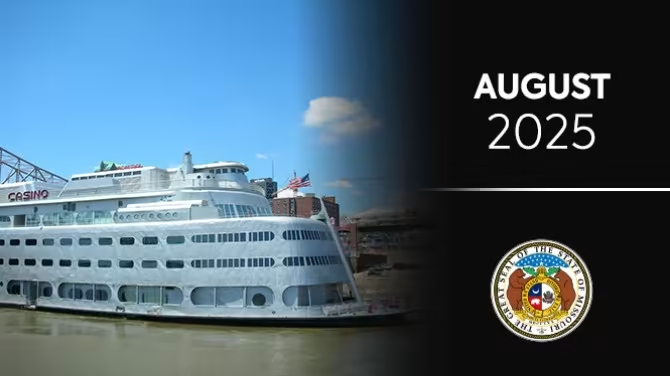
Missouri’s casino industry registered a strong performance in August, generating Rs. 177.5 million in revenue, a 9% increase compared with the same month last year. This growth underscores the resilience of the state’s gaming sector, driven by higher consumer spending and consistent demand for both traditional table games and slot machines. Beyond the revenue figures, the industry is contributing substantially to state taxes, local economies, and job creation. While operators celebrate the upswing, analysts caution that long-term growth will depend on managing market saturation, evolving customer preferences, and potential regulatory adjustments.
---
Consistent Growth in Gaming Revenue
Missouri’s casinos have shown steady expansion over the past year, with August’s Rs. 177.5 million in revenue marking one of the strongest monthly performances. Slot machines remain the primary revenue driver, accounting for the bulk of earnings, while table games also saw modest growth.
The year-over-year increase demonstrates not only consumer appetite for entertainment but also the effectiveness of marketing campaigns and facility enhancements that many operators have invested in to attract repeat visitors.
---
Contribution to State and Local Economies
The gaming sector continues to serve as a reliable source of income for Missouri. Casino-generated tax revenues are directed toward public programs, including education and infrastructure improvements, providing tangible benefits for residents across the state.
In addition, the industry supports thousands of jobs, both directly within casino operations and indirectly in surrounding businesses such as hospitality, retail, and tourism. For communities hosting casinos, the economic spillover has become an essential component of local development.
---
Factors Behind the Surge
Several dynamics contributed to August’s revenue spike. Seasonal tourism provided a boost, with more out-of-state visitors taking advantage of Missouri’s entertainment offerings. Moreover, rising consumer confidence and discretionary spending played a pivotal role in driving traffic to casinos.
Enhanced gaming technology, upgraded amenities, and promotional events also improved customer engagement. These investments suggest that operators are not only focused on short-term revenue but also on building long-term loyalty among patrons.
---
Challenges and Sustainability Concerns
Despite the promising numbers, analysts urge caution in interpreting the data as a guaranteed trend. Market saturation remains a risk, especially as neighboring states expand their own gaming industries. Additionally, broader economic uncertainties—such as inflation and shifts in consumer spending priorities—could influence future performance.
Responsible gambling measures are also under scrutiny. With rising revenues comes the responsibility to mitigate potential social costs tied to gambling addiction and financial distress. Regulators and operators alike are under pressure to balance profitability with consumer protection.
---
Outlook
Missouri’s Rs. 177.5 million in August casino revenue underscores the state’s growing position within the U.S. gaming landscape. While the 9% year-over-year increase highlights robust demand and successful operational strategies, the sustainability of this growth will depend on how the industry navigates competition, regulatory frameworks, and social responsibility. For now, the state’s casinos remain a vital contributor to both fiscal health and regional economic momentum.
Comments