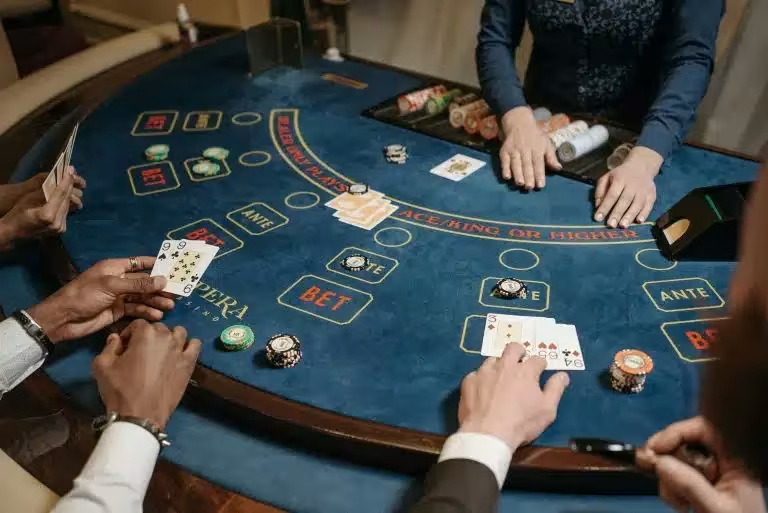
Lindau Casino witnessed a notable rise in visitor activity on December 22, underscoring a broader seasonal upswing in leisure and hospitality spending across Europe. The increase reflects a convergence of year-end tourism, festive travel, and renewed consumer confidence, particularly among domestic and regional visitors. Industry observers note that improved mobility, targeted promotions, and a growing appetite for experiential entertainment have contributed to the momentum. While the surge does not signal structural transformation, it highlights how well-positioned entertainment venues can capitalize on peak-season dynamics. The trend also offers insights into evolving consumer behavior ahead of the year-end holiday period.
Seasonal Tourism Drives Footfall Growth
The spike in visitors at Lindau Casino aligns with a familiar year-end pattern, when holiday travel and discretionary spending typically intensify. December 22, positioned just ahead of major festivities, has increasingly become a high-traffic date for leisure destinations. Lindau, benefiting from its scenic location and cross-border accessibility, appears to have leveraged this seasonal advantage effectively.
Hospitality analysts point out that such short-term increases are often driven by tourists seeking compact, high-value entertainment experiences during brief holiday breaks. Casinos, when integrated into broader tourism ecosystems, tend to benefit disproportionately from this influx.
Consumer Sentiment and Entertainment Spending
Beyond tourism, the visitor uptick reflects a subtle improvement in consumer sentiment. Despite lingering macroeconomic uncertainties, spending on entertainment has shown resilience, particularly during festive periods. Consumers appear more willing to allocate discretionary income toward experiences rather than goods, a shift that has gained traction over the past few years.
From a business perspective, this behavior favors venues that offer diversified entertainment options and efficient customer engagement. While no official revenue figures were disclosed, industry benchmarks suggest that higher footfall during peak days often translates into a meaningful short-term revenue lift, potentially running into several crores of Rs. when aggregated across the season.
Operational Readiness and Strategic Positioning
The December 22 surge also highlights the importance of operational preparedness. Casinos that anticipate seasonal demand—through staffing optimization, event programming, and customer flow management—are better positioned to convert visitor volume into sustainable financial performance.
Lindau Casino’s experience suggests that even mature entertainment markets can generate incremental gains through tactical execution rather than large-scale expansion. This approach is particularly relevant in a regulatory environment where growth is shaped more by efficiency and customer experience than by physical scale.
Broader Implications for the Leisure Industry
While a single-day increase does not redefine long-term prospects, it offers a useful snapshot of market conditions. For the wider leisure and gaming industry, the Lindau trend reinforces the importance of timing, location, and seasonal alignment. As the year draws to a close, similar venues may look to replicate this performance by fine-tuning promotions and enhancing experiential appeal.
In sum, the December 22 visitor boost serves as a reminder that, even in cautious economic climates, well-calibrated entertainment offerings can still draw strong consumer interest when it matters most.
Comments