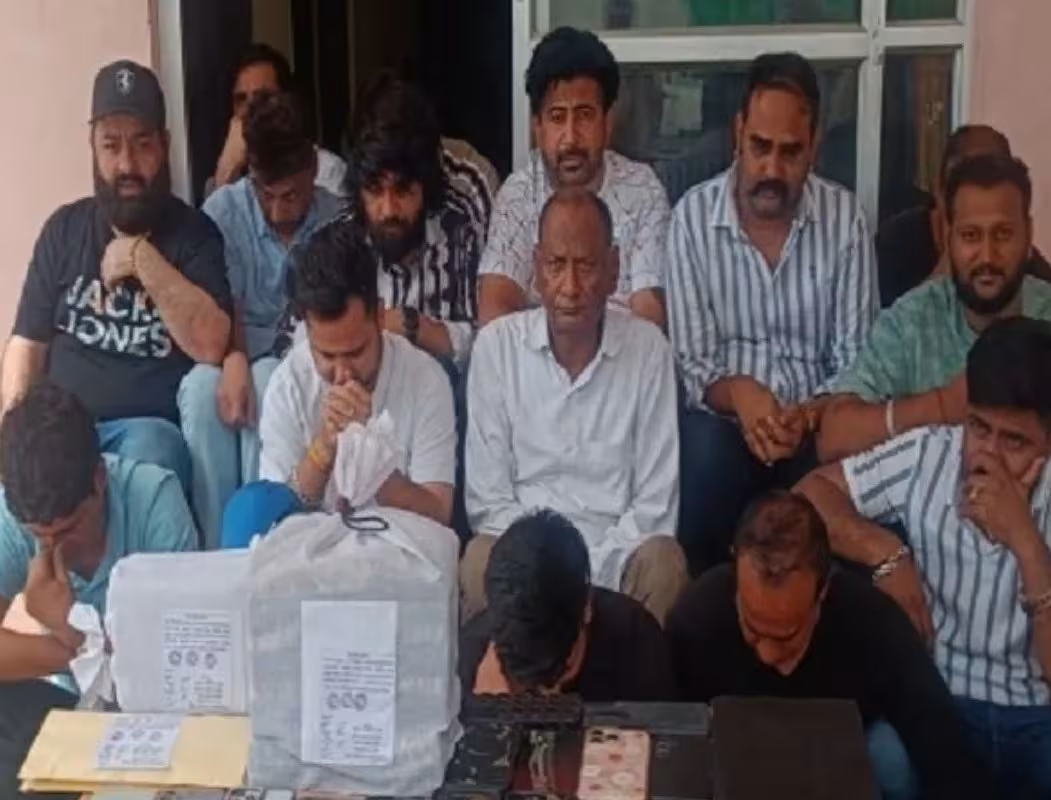
Authorities in Jaipur have dismantled a high-profile illegal gambling operation being run from a luxury villa, highlighting the persistence of underground betting networks in urban India. Acting on intelligence inputs, police arrested 16 individuals and seized cash, mobile devices, and vehicles. The setup reportedly mirrored a private casino, complete with structured gameplay and betting instruments. The incident underscores the growing sophistication of illicit gambling ventures and raises concerns about regulatory enforcement, financial transparency, and the misuse of upscale residential properties for illegal economic activities.
Crackdown on Illegal Gambling in Urban Enclaves
In a coordinated enforcement action, police in Jaipur uncovered a clandestine gambling syndicate operating from an upscale residential property. The raid, carried out in the Bhankrota area, exposed a well-organized betting setup functioning within the confines of a luxury villa, signaling a shift in how illegal gaming activities are being conducted in metropolitan regions.
Officials confirmed that 16 individuals were detained during the operation, marking one of the more significant crackdowns on illicit gambling networks in recent months.
Inside the Operation: Intelligence-Led Enforcement
The operation was initiated following credible intelligence inputs indicating large-scale gambling activities at a villa located in the Empress Greens residential complex. Acting swiftly, teams from the Bhankrota police station and the District Special Team (DST West) coordinated a targeted raid.
The property was discreetly surrounded before officers moved in, ensuring minimal opportunity for suspects to escape. According to officials, the execution of the raid reflected a high level of preparedness and precision, indicative of growing institutional focus on tackling organized economic offenses.
A Casino-Like Setup in a Private Residence
What investigators discovered inside the villa was far from a casual gambling gathering. The premises had been transformed into a structured gaming environment resembling a private casino. Participants were reportedly engaged in high-stakes card games, using plastic tokens as betting instruments—an operational model commonly associated with regulated gaming establishments.
The use of such systems suggests an attempt to replicate formal casino operations while evading regulatory oversight. This level of sophistication points to the increasing professionalization of illegal gambling networks, which are adapting to enforcement pressures by shifting into private, controlled environments.
Seizures and Financial Implications
During the raid, authorities seized a substantial amount of cash along with multiple mobile phones and vehicles believed to be linked to the operation. While the exact value of the recovered assets has not been officially disclosed, the scale of the seizure indicates significant financial activity.
From a financial perspective, such operations often function as unaccounted cash ecosystems, raising concerns around tax evasion, money laundering, and the circulation of illicit funds. The absence of regulatory oversight further compounds the risks, both for participants and the broader financial system.
Behavioral Patterns and Network Dynamics
Police officials noted that the individuals present at the villa appeared to be part of a coordinated network rather than случай participants. The organized nature of the setup, combined with the scale of operations, suggests the involvement of facilitators who manage logistics, finances, and participant engagement.
Upon the arrival of law enforcement, panic reportedly spread among those present. However, the swift action of the police ensured that key individuals were apprehended before they could flee or destroy evidence.
Regulatory Challenges and Enforcement Gaps
The incident highlights persistent challenges in regulating gambling activities in India, where legal frameworks vary significantly across states. While certain forms of gaming are permitted under strict conditions, unlicensed operations continue to thrive in legal grey areas.
The use of private properties, particularly luxury villas, as venues for such activities complicates enforcement efforts. These locations offer privacy and exclusivity, making detection more difficult and enabling operators to cater to high-value clientele.
Broader Economic and Social Implications
Beyond the immediate legal violations, illegal gambling operations have wider economic and social ramifications. They contribute to the growth of parallel economies, distort legitimate financial flows, and can lead to increased instances of financial distress among participants.
For policymakers and enforcement agencies, the case underscores the need for enhanced surveillance mechanisms, inter-agency coordination, and stricter penalties to deter such activities. It also highlights the importance of public awareness regarding the risks associated with unregulated betting environments.
Conclusion: A Warning Signal for Urban Enforcement
The busting of the illegal casino operation in Jaipur serves as a stark reminder of the evolving nature of underground economic activities. As operators adopt more sophisticated methods and upscale settings, enforcement agencies must continuously adapt their strategies.
For stakeholders in the financial and regulatory ecosystem, the incident reinforces the importance of transparency, compliance, and vigilance. In an increasingly interconnected economy, unchecked illicit activities not only undermine legal frameworks but also pose systemic risks that extend far beyond their immediate context.
Comments