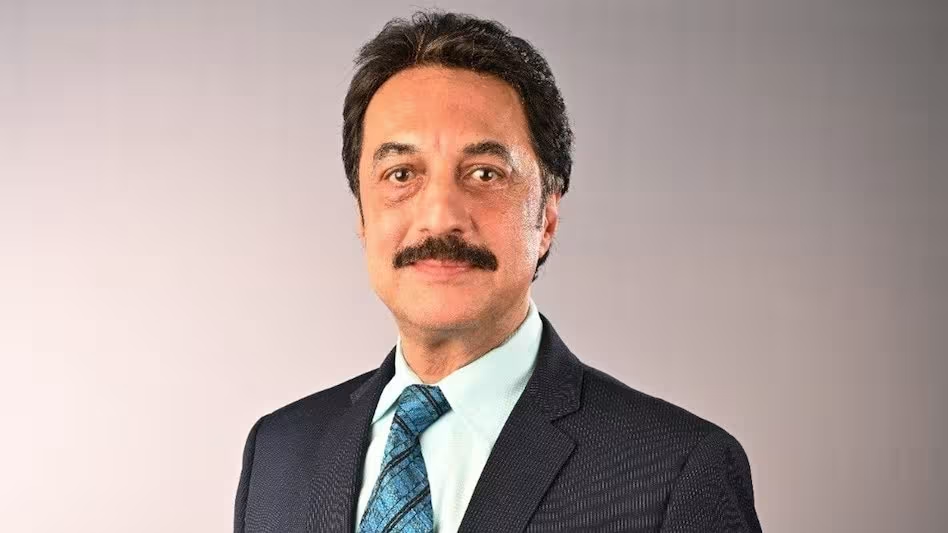
Veteran investor Shankar Sharma has voiced strong concerns over the growing speculative nature of India’s equity derivatives market, cautioning that the country must not allow its financial ecosystem to resemble a “casino.” His remarks center on the Securities Transaction Tax (STT) imposed on futures and options trades, which he argues reflects deeper structural issues in market participation and regulatory priorities. Sharma emphasized the need to rebalance India’s capital markets toward long-term investing rather than short-term speculation. His comments arrive amid surging retail participation in derivatives, prompting broader debate over risk exposure, taxation policy, and the sustainability of current trading trends.
A Stark Warning on Market Direction
Shankar Sharma, known for his candid market views, has criticized the rapid expansion of derivatives trading in India, describing the trend as potentially destabilizing. He warned that excessive focus on speculative instruments such as futures and options risks transforming the stock market into an arena driven more by short-term bets than by capital formation.
According to Sharma, the increasing dominance of leveraged trades reflects a shift away from traditional equity investing. He suggested that this trajectory could undermine the core purpose of financial markets — channeling savings into productive economic activity.
The Debate Around Securities Transaction Tax
A central element of Sharma’s critique involves the Securities Transaction Tax on derivatives trades. While STT was originally introduced to improve transparency and widen the tax base, he believes its current structure highlights how deeply speculative trading has penetrated the system.
He argues that taxation policies should not inadvertently encourage volume-driven trading that prioritizes rapid turnover over value creation. Instead, Sharma advocates a framework that promotes long-term capital allocation, corporate growth, and investor stability.
Market participants note that STT collections from derivatives have risen sharply in recent years, mirroring a surge in retail participation. This has led policymakers to examine whether tax and regulatory measures are adequately aligned with broader financial stability objectives.
Retail Participation and Rising Risk Appetite
India has witnessed an unprecedented influx of individual traders into the futures and options segment. Low entry barriers, digital trading platforms, and social media-driven market narratives have accelerated participation. However, Sharma cautions that many new entrants may not fully understand the risks associated with leveraged instruments.
Derivatives, while valuable for hedging and price discovery, can magnify losses when used primarily for speculation. Sharma’s comments highlight concerns that unchecked enthusiasm could lead to financial distress among retail investors, particularly during periods of market volatility.
Broader Implications for Market Stability
Sharma’s remarks also touch on systemic implications. An overreliance on speculative flows can amplify market swings, reduce the relative importance of fundamentals, and create liquidity imbalances. In such an environment, price discovery may become distorted, weakening investor confidence over time.
He suggests that regulators and policymakers should reassess whether current market incentives disproportionately favor short-term trading activity. Measures that deepen long-term equity ownership, encourage institutional participation, and strengthen investor education could help restore balance.
The Path Forward
While derivatives remain an essential component of modern financial markets, Sharma’s warning underscores the need for proportional growth and prudent oversight. Striking the right balance between innovation, accessibility, and stability will be critical as India’s capital markets continue to expand.
His “casino” analogy serves less as a rejection of derivatives and more as a call for recalibration — ensuring markets reward informed investing over speculative excess. For policymakers, brokers, and investors alike, the message is clear: sustainable market development must rest on discipline, transparency, and long-term vision.
Comments