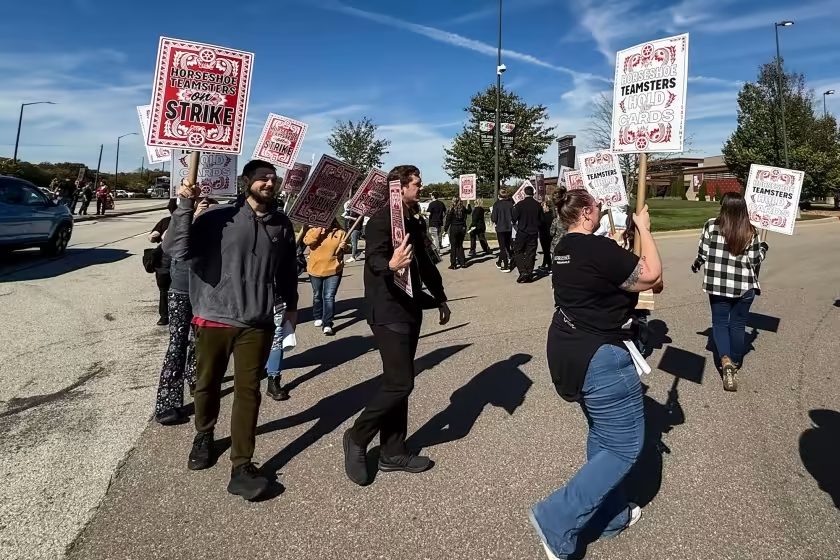
Workers at Horseshoe Casino have launched a strike demanding official recognition of their union and improved working conditions, marking a significant moment in the ongoing national conversation around labor rights in the gaming industry. Employees from various departments, including hospitality, security, and gaming operations, walked off their jobs after months of unsuccessful negotiations. The strike underscores broader concerns over wage disparities, job security, and workplace equity. As labor unions regain momentum across multiple U.S. industries, the situation at Horseshoe Casino could set a crucial precedent for employee representation and collective bargaining within the country’s billion-dollar casino sector.
---
The Beginning of a Historic Labor Action
The first day of the strike at Horseshoe Casino unfolded with hundreds of employees gathering outside the premises, carrying placards and voicing their demand for union recognition. The coordinated demonstration was organized by workers who claim that management has failed to address ongoing grievances regarding compensation, scheduling, and workplace safety.
Striking employees argue that while the casino continues to post strong revenue figures, their earnings have not reflected the same growth. Many have also raised concerns about irregular shifts, long working hours, and inadequate benefits compared to similar establishments within the gaming industry.
---
Core Demands: Recognition, Fair Wages, and Respect
At the heart of the movement lies the demand for formal union recognition. Workers contend that collective representation is essential to secure fair treatment, improved pay scales, and enhanced safety standards. They assert that management has resisted previous attempts to unionize, despite multiple petitions and requests for dialogue.
Employees are seeking the right to negotiate comprehensive labor contracts that guarantee consistent pay raises, job protection, and equitable treatment across departments. The strike, they emphasize, is not merely about monetary gain but about fairness, dignity, and the right to have a unified voice in workplace decisions.
---
Management’s Response and Negotiation Status
While the casino’s management has acknowledged the strike, it has reiterated its commitment to keeping operations running and maintaining guest services without disruption. Spokespersons have stated that the organization values its workforce and is open to constructive dialogue, provided it aligns with operational priorities and existing labor laws.
However, union representatives argue that prior discussions have yielded little progress, forcing employees to take collective action. They have called upon management to engage in transparent negotiations and to acknowledge the union as an official bargaining body—an acknowledgment that could pave the way for structured labor agreements in the future.
---
Economic and Industry-Wide Implications
The strike at Horseshoe Casino comes at a time when the gaming industry is navigating a complex economic landscape. Post-pandemic recovery has led to record revenues for many casino operators, yet workers across the country argue that wages have not kept pace with profits.
Analysts suggest that the outcome of this strike could influence other casinos and entertainment venues where union efforts are underway. Successful recognition at Horseshoe could embolden similar campaigns across major gaming hubs, reshaping the labor dynamics of an industry that has long relied on flexible, high-turnover employment models.
---
Worker Sentiment and Public Support
The striking employees have received growing support from local labor organizations, community leaders, and advocacy groups who view the movement as part of a broader struggle for economic fairness. Demonstrators have emphasized that their strike is peaceful and aimed at dialogue rather than confrontation.
Many participants have shared personal accounts of long-term dedication to the casino, expressing disappointment that loyalty has not been matched by equitable treatment. Public sympathy for such movements has risen nationally, with workers in multiple industries—from hospitality to logistics—voicing similar concerns about fairness and representation.
---
The Broader Labor Context
The labor action at Horseshoe Casino reflects a broader resurgence of worker activism across the United States. Over the past two years, union drives have gained traction at companies once considered resistant to organized labor, signaling a generational shift in attitudes toward workplace advocacy.
Experts note that younger employees, in particular, are driving this momentum, prioritizing job stability, mental well-being, and fair compensation over traditional notions of corporate loyalty. For the casino sector—an industry historically marked by fluctuating wages and unpredictable hours—unionization could redefine the balance of power between employers and employees.
---
Conclusion: A Defining Moment for Labor Rights
As the strike at Horseshoe Casino enters its next phase, both sides face mounting pressure to reach an equitable resolution. The workers’ call for recognition has resonated beyond the casino floor, symbolizing a renewed demand for accountability and fairness across corporate America.
If successful, the movement could inspire similar actions within other high-revenue sectors where employees feel undervalued. The unfolding situation serves as a reminder that sustainable business growth must rest on a foundation of shared prosperity—where workers’ voices are not only heard but respected.
Comments