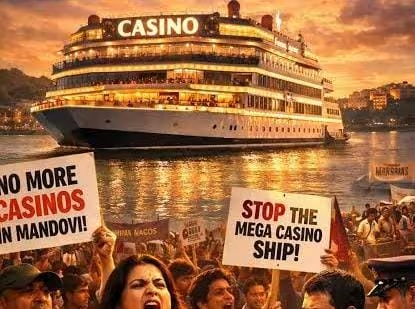
A large public gathering in Panaji has intensified opposition to the proposed entry of a new offshore casino vessel into the Mandovi River, with residents and activists urging the Goa government to reconsider its tourism priorities. The meeting concluded with resolutions demanding a gradual phase-out of river-based casinos, citing environmental degradation, cultural dilution and long-term economic risks. At the center of the controversy is a 112-metre-long vessel planned for deployment in the ecologically sensitive waterway. Protesters argue that accommodating such mega infrastructure could permanently damage the river’s fragile ecosystem and distort Goa’s tourism identity.
Public Mobilization in Panaji
Panaji witnessed a significant civic mobilization as residents, environmental advocates and cultural activists convened at the Institute Menezes Braganza hall to oppose the induction of a new casino vessel into the Mandovi River.
The gathering drew participants from across Goa and culminated in the unanimous adoption of several resolutions. These called on the state government to halt further expansion of river-based casinos and initiate a structured roadmap to gradually phase out the industry from inland waterways.
Speakers framed the issue not as an isolated commercial decision but as a defining moment in Goa’s development trajectory.
Environmental Concerns Over Mega Vessel Entry
At the heart of the protest lies the proposed deployment of a Deltin casino vessel measuring approximately 112 metres in length and 30 metres in height. Participants argued that accommodating such a large floating structure would necessitate dredging and additional modifications to the riverbed.
Environmental experts present at the meeting warned that dredging could disturb sediment balance, threaten aquatic biodiversity and accelerate ecological degradation. The Mandovi River, a vital natural and cultural asset, supports diverse marine life and plays a central role in the region’s ecological equilibrium.
Critics cautioned that repeated infrastructural interventions in a fragile estuarine system may result in irreversible damage, undermining long-term environmental sustainability for short-term commercial gains.
Tourism Identity at a Crossroads
Beyond environmental considerations, speakers raised concerns about Goa’s branding as a tourism destination. Several participants criticized what they described as an overemphasis on gambling-driven revenue streams at the expense of heritage-based tourism.
They argued that positioning Goa primarily as a casino hub risks overshadowing its historic architecture, coastal landscapes and cultural traditions. Calls were made to reposition the state as a family-oriented destination centered on nature, culture and hospitality rather than high-stakes gaming.
From an economic standpoint, some analysts at the event contended that sustainable tourism models—such as eco-tourism and heritage tourism—generate broader employment multipliers and lower environmental costs over time.
Economic Trade-Offs and Livelihood Considerations
While advocating for environmental protection, the assembly acknowledged the employment generated by the casino industry. Participants proposed that any phase-out plan must incorporate a structured rehabilitation framework for affected workers.
This could include reskilling programs, financial assistance and redeployment into alternative sectors such as hospitality, cultural tourism and marine conservation initiatives.
Policy observers note that balancing ecological preservation with livelihood security remains a complex governance challenge. A transition strategy, if implemented, would require coordinated fiscal planning and stakeholder engagement.
Broader Policy Implications
The protest reflects deeper questions about Goa’s long-term development model. Should revenue generation from gaming take precedence over ecological and cultural preservation? Or can the state pivot toward a diversified tourism economy that aligns economic growth with environmental stewardship?
Experts argue that unchecked expansion of high-impact commercial activities along river systems may erode the very assets that sustain tourism demand. Sustainable development frameworks increasingly emphasize ecological valuation—placing economic worth on biodiversity and natural capital.
The debate unfolding in Panaji may therefore influence future regulatory decisions regarding coastal zoning, inland waterways management and tourism licensing.
Conclusion
The demonstration in Panaji signals mounting public scrutiny of river-based casino operations in Goa. By opposing the entry of a large new vessel into the Mandovi River, residents have framed the issue as a broader referendum on environmental integrity, cultural identity and sustainable economic planning.
As policymakers weigh fiscal considerations against ecological risk, the outcome of this debate could shape the future character of Goa’s tourism industry—and determine whether growth is pursued at the expense of preservation or in harmony with it.
Comments