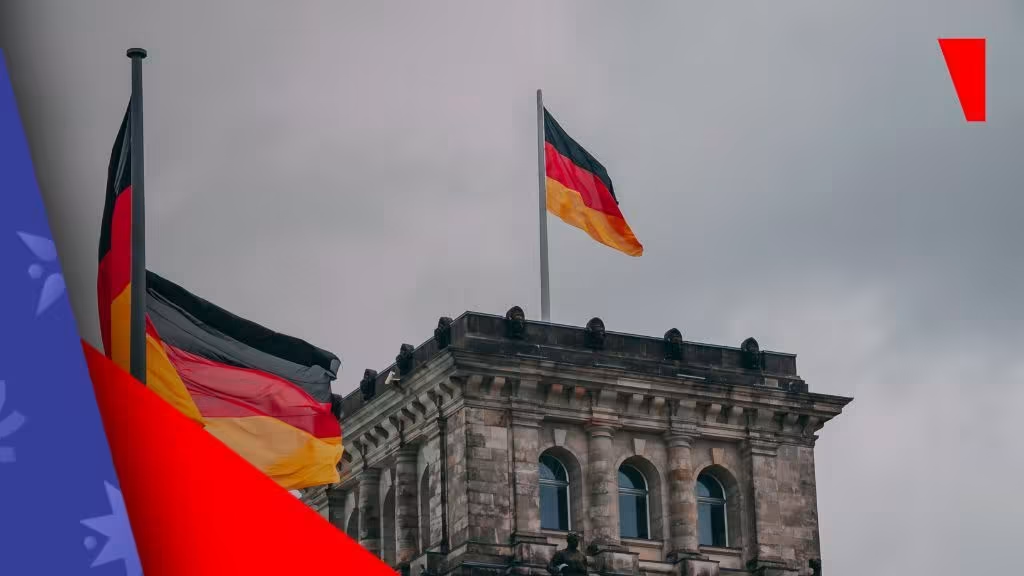
Germany is intensifying its crackdown on black-market gambling by bringing national and regional regulators into closer alignment to strengthen oversight and protect consumers. With illegal operators expanding rapidly through online channels, authorities are prioritizing coordinated enforcement, data sharing and more robust compliance mechanisms to safeguard the integrity of the legal gambling market. The strategy seeks to address rising risks linked to unlicensed betting platforms, including financial losses, inadequate player protection and potential links to organized crime. As lawmakers and regulators tighten their approach, Germany aims to rebuild market discipline, ensure fair competition and reduce the social harms associated with illicit gambling.
---
Regulators Unite to Address a Growing Threat
German authorities have launched a more consolidated regulatory framework designed to combat the persistent rise of black-market gambling. The move brings together federal officials, state-level regulators and specialized agencies that oversee betting and gaming compliance. Their shared objective is to create a single, coherent front against unlicensed operators that continue to target German consumers despite strict market rules.
Officials noted that black-market gambling has evolved into a high-tech enterprise, with foreign operators exploiting digital loopholes to bypass national regulations. This cooperation aims to limit the influence of such platforms while reinforcing Germany’s long-standing commitment to regulated and responsible gaming.
---
Coordinated Enforcement to Protect Consumers
A central component of the initiative is the expansion of joint enforcement actions. Regulators will now collaborate more closely on monitoring suspicious activity, sharing intelligence and taking legal measures against entities offering unauthorized services.
Authorities emphasized that the black-market environment exposes consumers to significant risks, including lack of identity verification, unsafe gaming environments and the absence of dispute-resolution mechanisms. By unifying enforcement, Germany aims to shut down access points that allow illegal operators to reach local users.
---
Strengthening the Legal Gambling Ecosystem
The joint plan also focuses on fortifying Germany’s regulated gaming sector, which has struggled to compete with unlicensed rivals offering high payouts and fewer restrictions. Regulators intend to review compliance frameworks, update licensing conditions and support legal operators in meeting modern standards for player protection and responsible gaming.
Partnerships between public institutions and licensed operators are expected to improve market transparency and enhance public trust. By creating a more competitive and secure legal market, authorities hope to naturally reduce the appeal of illegal alternatives.
---
Addressing Social and Economic Risks
Beyond regulatory violations, black-market gambling has broader implications for public welfare. Officials highlighted growing concerns around addiction, financial exploitation and potential links to illicit financial flows. The coordinated effort aims to mitigate these risks through improved monitoring, early-warning systems and prevention strategies.
Germany’s renewed focus on cohesive policy execution reflects a recognition that gambling regulation is not solely an economic matter but a significant public health and social stability issue.
---
A Strategic Shift with Long-Term Intent
The nation’s unified stance marks a strategic shift toward long-term regulatory modernization. While previous enforcement measures were largely fragmented, the new framework seeks to create continuity and speed in decision-making, enabling faster responses to emerging threats in the digital gambling landscape.
As regulators work together to close existing gaps, Germany’s gambling market is expected to evolve into a more secure, transparent and responsibly managed environment for both consumers and licensed operators.
Comments