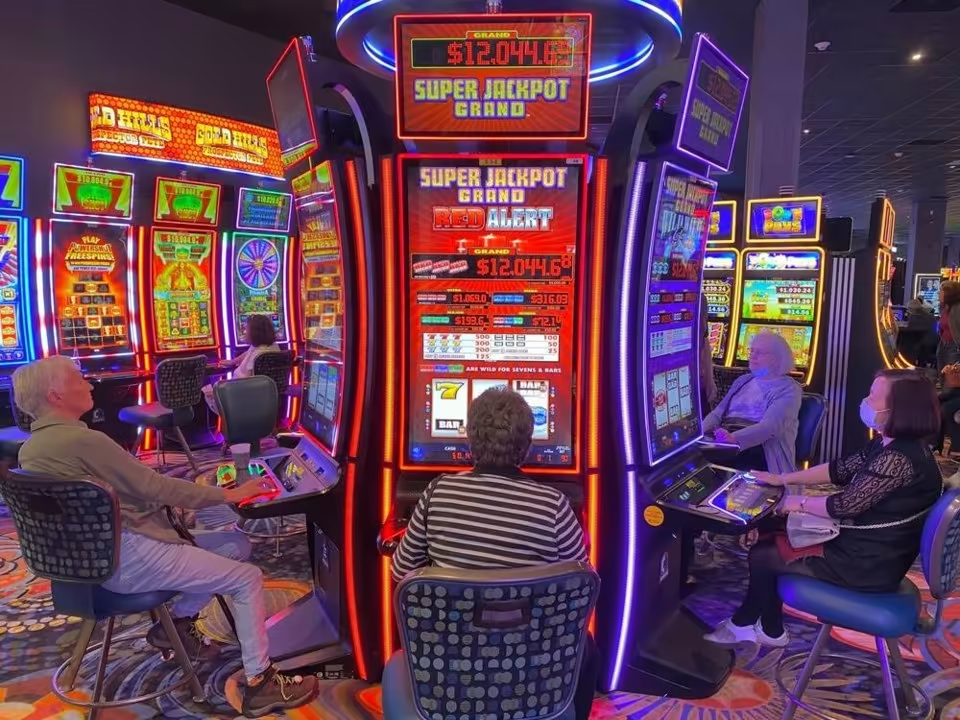
A reduction in financial inflows from Delta Casino is expected to impact the city’s revenue projections, prompting concerns among administrators and local businesses that rely on gaming-generated funds. The decline comes at a time when municipalities are already navigating rising operational costs, shifting tourism patterns, and competitive pressures within the gaming sector. As the casino’s revenue share decreases, policymakers must reassess budget allocations and explore alternative streams of income to maintain essential services. The situation highlights the vulnerability of relying heavily on a single gaming operator, underscoring the need for long-term financial diversification and more resilient economic planning.
---
Shrinking Casino Proceeds Raise Fiscal Concerns
City officials anticipate a notable drop in revenue from Delta Casino, a key contributor to local financial resources. The decline is linked to lower-than-expected footfall, evolving consumer preferences, and intensified competition from nearby gaming destinations. While Delta has historically served as a reliable revenue pillar, recent market pressures have slowed its performance, reducing the city’s share of gaming proceeds.
Local administrators warn that even a modest decline in casino-linked income can create budgetary imbalances, particularly in sectors that depend heavily on these funds for day-to-day operations.
---
Operational Shifts Affecting Delta’s Earnings
Industry observers attribute the casino’s reduced contributions to a combination of internal adjustments and external industry dynamics. Shifts in player behavior—driven by digital gaming alternatives and changing entertainment trends—have softened in-person gambling activity. Additionally, the company’s operational restructuring and cautious investment strategies have resulted in lower revenue output compared to previous years.
These adjustments may be strategic for Delta’s long-term stability, but they pose immediate challenges for municipalities accustomed to more robust financial inflows.
---
Impact on City Budget and Public Services
The city’s annual financial plan includes allocations supported by casino-generated revenue, making any decline particularly impactful. Reduced payments from Delta could affect funding for infrastructure maintenance, social initiatives, and cultural programs. Departments that rely on discretionary income may see constrained budgets, while larger projects could face delays or scaled-back execution.
City leaders have begun reviewing expenditure frameworks to ensure essential services remain uninterrupted despite the narrowing income stream.
---
Calls for Diversification and Sustainable Revenue Strategies
The situation has sparked renewed discussion on the importance of diversifying municipal revenue sources. Economists warn that relying on a single entertainment-based contributor—particularly in a volatile sector—leaves cities exposed to financial instability. Officials are examining alternative strategies, including tourism incentives, commercial development partnerships, and expanded non-gaming investments to strengthen the city’s long-term fiscal resilience.
The Delta Casino shortfall serves as a reminder that economic planning must adapt to changing industry patterns, especially in communities where gaming has been a dominant revenue driver.
---
Delta’s Position and Market Realities
While Delta Casino remains a prominent operator, its declining payments reflect broader shifts across the gaming industry. Operators nationwide are reassessing cost structures, prioritizing profitability, and preparing for increasingly competitive digital alternatives. As such, physical casinos face mounting pressure to innovate, diversify their offerings, and align with modern customer expectations.
Delta continues to maintain a substantial presence, but its reduced contributions show how even well-established venues can face headwinds in a rapidly evolving entertainment landscape.
---
Conclusion
The projected fall in revenue from Delta Casino marks a pivotal moment for city planners, offering both a challenge and an opportunity. While immediate budgetary adjustments may be required, the situation underscores a broader imperative: to build a more diversified, sustainable, and future-ready revenue model. As the gaming industry continues to transform, municipalities must adapt with equal agility to safeguard their financial stability and public services.
Comments