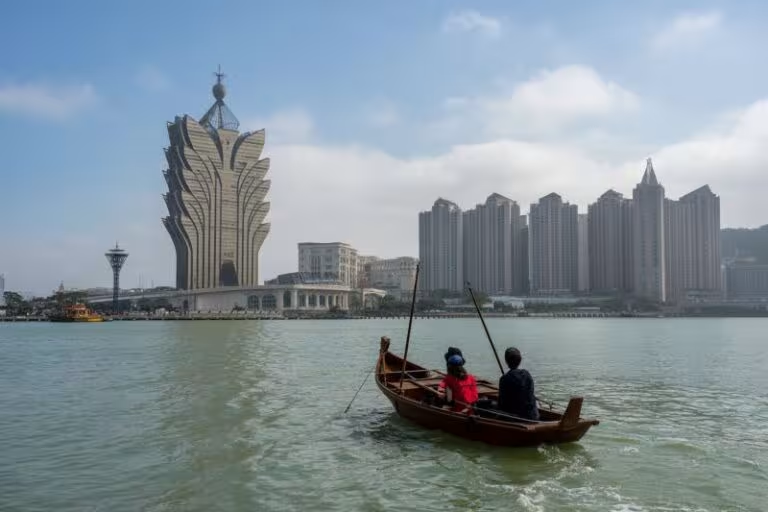
Macau’s tourism landscape is undergoing a structural shift as casino closures begin to alter travel patterns, investor sentiment, and visitor expectations. Long dependent on gaming-driven footfall, the city is now confronting the economic and logistical consequences of consolidation within its casino sector. While authorities aim to reposition Macau as a diversified leisure and cultural destination, the transition has introduced short-term disruptions to employment, hotel occupancy, and travel planning. For tourists, the changes affect accommodation availability and entertainment options, while for the broader economy, they signal a recalibration of growth strategy. The closures mark a pivotal moment in Macau’s evolution as a global tourism hub.
Why Casinos Are Closing
The recent wave of casino closures in Macau is largely the result of regulatory tightening, license restructuring, and rising operational costs. Smaller and satellite casinos, operating on thinner margins, have struggled to comply with new compliance standards and revised concession frameworks.
From a financial perspective, consolidation has become inevitable. Operators are prioritizing efficiency, capital discipline, and long-term sustainability over scale. While this strengthens the sector’s balance sheet, it also reduces the number of gaming venues that once anchored Macau’s tourism ecosystem.
Immediate Impact on Tourism
Casino closures have had a direct effect on visitor flows, particularly among short-stay travelers who traditionally planned trips around specific gaming properties. Reduced gaming options have led some tourists to shorten visits or reconsider travel plans altogether.
Hotel occupancy has also seen localized pressure, especially where accommodation was closely tied to shuttered casinos. Tour operators note that travel itineraries are being adjusted, with greater emphasis on integrated resorts that continue to operate at scale.
Employment and Local Economy Effects
The closures carry significant implications for employment. Casino-linked jobs extend beyond gaming floors to hospitality, retail, logistics, and transport services. Any contraction in this ecosystem has a multiplier effect on household incomes and local consumption.
For Macau’s administration, managing workforce transitions has become a priority. Retraining programs and job reallocation initiatives are increasingly viewed as essential to cushioning the economic impact while supporting longer-term diversification goals.
Changing Travel Preferences
Tourism behavior in Macau is gradually shifting. Visitors are showing increased interest in non-gaming attractions such as cultural sites, culinary experiences, and entertainment events. This trend aligns with policy efforts to reduce reliance on gambling revenue.
However, the transition is uneven. High-spending gaming tourists remain a critical revenue source, and replacing their economic contribution requires sustained investment in alternative attractions and international marketing.
Strategic Implications for Investors and Planners
For investors, casino closures highlight the importance of regulatory risk assessment and revenue diversification. Capital allocation is increasingly favoring large, integrated developments capable of delivering stable returns across gaming, hospitality, and entertainment segments.
Travel planners, meanwhile, are adapting to a more concentrated market structure. Package offerings are being refined to focus on fewer but larger resorts, changing the competitive dynamics of Macau’s tourism industry.
The Road Ahead for Macau
The closure of casinos does not signal decline but transformation. Macau is entering a phase where tourism growth will depend less on volume and more on value, experience quality, and brand repositioning.
If managed effectively, the current disruption could lay the foundation for a more resilient and diversified tourism economy. For now, however, travelers, businesses, and policymakers must navigate a period of adjustment that will define Macau’s future as a global destination.
Comments