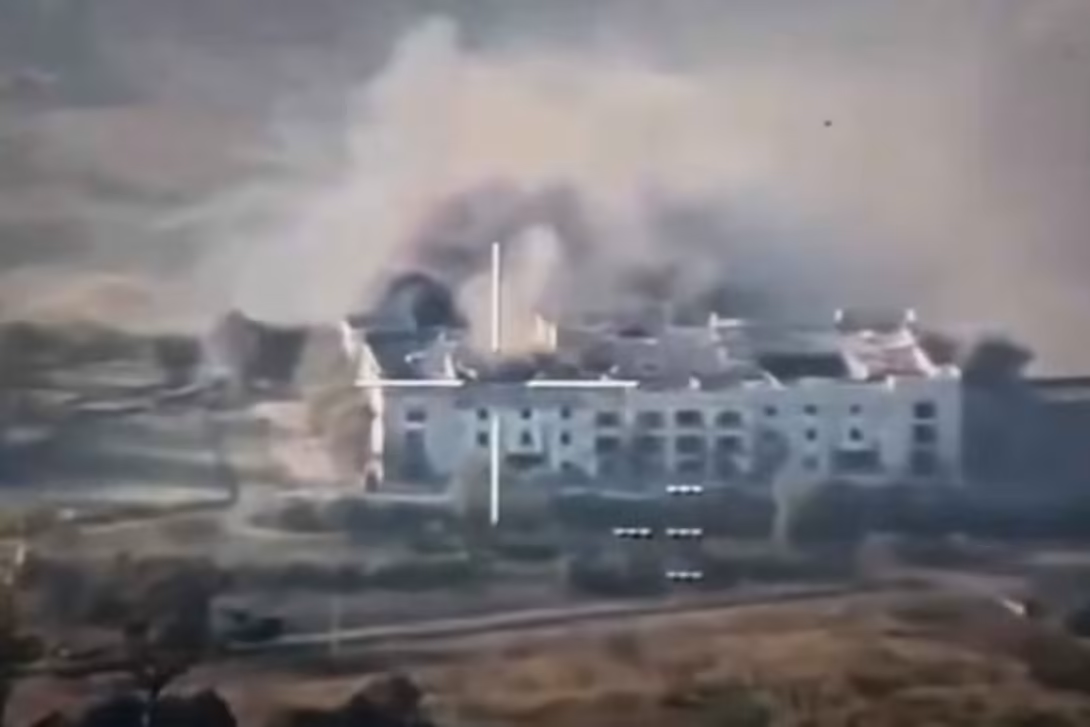
Thailand’s recent bombing of casino complexes along the Cambodian border has introduced a troubling humanitarian dimension to an already volatile security issue. While Bangkok frames the strikes as part of a broader campaign against transnational crime and illicit financial networks, rights advocates warn that the operations may be placing thousands of trafficking victims at heightened risk. These casino hubs, long suspected of laundering money and sheltering criminal syndicates, are also known to house forced laborers trapped in scam centers and illegal gambling operations. Airstrikes risk worsening their plight, obscuring accountability, and complicating rescue efforts.
---
A Security Offensive with Regional Implications
Thailand’s decision to conduct airstrikes near its eastern frontier reflects mounting frustration with criminal ecosystems operating just beyond its jurisdiction. Cambodian border casinos have for years been associated with illegal gambling, cyber fraud, and underground financial flows that bleed into Thailand’s economy. Officials argue that kinetic action is necessary to disrupt networks that conventional law enforcement has struggled to dismantle.
From a security standpoint, the rationale is clear: these complexes function as revenue engines for organized crime, undermining financial integrity and public safety. However, military solutions to criminal enterprises are inherently blunt, particularly when the targets are commercial structures embedded in civilian zones.
---
Casinos as Fronts for Forced Labor
Behind the neon-lit façades of many border casinos lies a darker reality. Investigations by regional authorities and humanitarian groups have consistently linked these sites to human trafficking operations, where victims are coerced into working in online scam centers, illegal betting rooms, and money-laundering units. Many are foreign nationals lured by false job offers and subsequently stripped of freedom.
Airstrikes on such facilities risk trapping victims inside damaged compounds, cutting off escape routes, or prompting traffickers to move captives hastily to more remote locations. In chaos, victims often become invisible, making identification and rescue significantly harder.
---
Humanitarian Risks and Legal Questions
The bombings raise uncomfortable questions under international humanitarian and human rights law. Even when targets are associated with criminal activity, states are expected to consider proportionality and civilian harm. Trafficking victims, by definition, are not combatants; they are unlawfully detained civilians.
There is also the issue of evidence. Destroying sites believed to host trafficking operations may eliminate physical proof crucial for prosecutions, reparations, and future prevention. From a justice perspective, rubble cannot testify.
---
Economic Undercurrents and Financial Crime
These casinos are not merely local nuisances; they are nodes in a wider regional financial web. Illicit proceeds from scams and illegal gambling are often funneled across borders, distorting legitimate markets and eroding trust in financial systems. Thailand’s hardline response reflects concern over reputational risk and the indirect economic costs of unchecked criminal finance.
Yet financial crimes typically demand financial remedies: asset freezes, coordinated investigations, and regulatory pressure. Bombs, while dramatic, do little to unravel complex money trails.
---
The Case for Coordination Over Confrontation
Analysts argue that a coordinated bilateral or regional approach would yield better results. Joint task forces, intelligence sharing, and victim-centered rescue operations could dismantle trafficking rings while preserving lives. For Cambodia, the challenge lies in balancing sovereignty with accountability; for Thailand, in aligning security objectives with humanitarian obligations.
Without such cooperation, airstrikes may achieve short-term disruption but long-term harm—displacing victims, entrenching criminal secrecy, and inflaming diplomatic tensions.
---
A Crisis Beyond the Battlefield
At its core, the issue is not merely about casinos or borders, but about people caught in the machinery of transnational crime. Military action may signal resolve, but it risks overlooking those with the least agency and the most to lose.
If the objective is to weaken criminal networks sustainably, protecting trafficking victims must move from an afterthought to a central strategy. Otherwise, the war on illicit finance may end up deepening the human cost it claims to prevent.
Comments