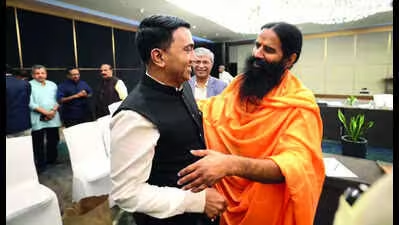
Yoga guru and entrepreneur Baba Ramdev has voiced concern over Goa’s growing association with casino tourism, arguing that the coastal state should instead cultivate a global reputation centered on wellness, yoga, and holistic health. Speaking at a public forum, he suggested that India’s natural and cultural assets position Goa to become an international destination for preventive healthcare and spiritual tourism. His remarks come amid ongoing debates about the economic role of gaming in the state. The comments highlight a broader policy tension between revenue-generating entertainment industries and sustainable, culturally aligned tourism development strategies.
A Call to Redefine Goa’s Tourism Identity
Baba Ramdev has publicly questioned the long-term implications of Goa’s increasing identification as a casino hotspot, stating that the state’s global image should better reflect India’s traditional strengths in wellness and spirituality. He argued that an overreliance on gaming-driven tourism could overshadow opportunities in sectors aligned with health, sustainability, and cultural heritage.
His comments add to a recurring policy conversation in Goa, where tourism remains a primary economic engine but stakeholders differ on what form of development best serves the state’s future.
Wellness Tourism as an Economic Alternative
Ramdev proposed that Goa could emerge as a leading international hub for yoga retreats, naturopathy centers, Ayurvedic treatments, and holistic lifestyle programs. The global wellness tourism market has expanded steadily over the past decade, driven by rising health awareness, stress-related lifestyle disorders, and increased interest in preventive care.
Industry analysts note that wellness tourism often attracts longer-stay visitors who spend on accommodation, therapies, organic cuisine, and cultural experiences — a model that can generate sustained local employment with comparatively lower social externalities.
The Casino Economy Debate
Casino operations, particularly offshore gaming vessels, have become a prominent feature of Goa’s tourism economy. Supporters argue that the sector generates significant employment, licensing revenue, and allied economic activity across hospitality and transport services.
Critics, however, contend that a gaming-centric image may deter family-oriented and wellness-focused travelers. Concerns have also been raised periodically about regulatory oversight, social impact, and the compatibility of large-scale gaming with Goa’s ecological and cultural landscape.
Branding, Policy, and Long-Term Positioning
Tourism experts say destination branding plays a critical role in shaping investment flows and visitor demographics. A strong wellness identity could position Goa alongside established global centers known for health tourism, potentially attracting higher-value international visitors.
However, transitioning branding strategies requires coordinated policy support, infrastructure investment, and skill development in healthcare, hospitality, and alternative medicine sectors. Policymakers would need to balance existing revenue streams with long-term diversification goals.
A Broader National Context
India has increasingly promoted traditional medicine systems, yoga, and spiritual tourism as part of its soft-power and economic strategy. Integrating these strengths into state-level tourism models could align regional development with national priorities.
Ramdev’s remarks underscore a larger question facing many destinations: whether short-term commercial gains should outweigh opportunities to build a globally distinctive, sustainable tourism identity rooted in cultural and wellness assets.
As Goa charts its future tourism roadmap, the debate highlights a fundamental economic choice — whether to lean further into entertainment-driven growth or reposition itself as a sanctuary for health, heritage, and holistic living.
Comments